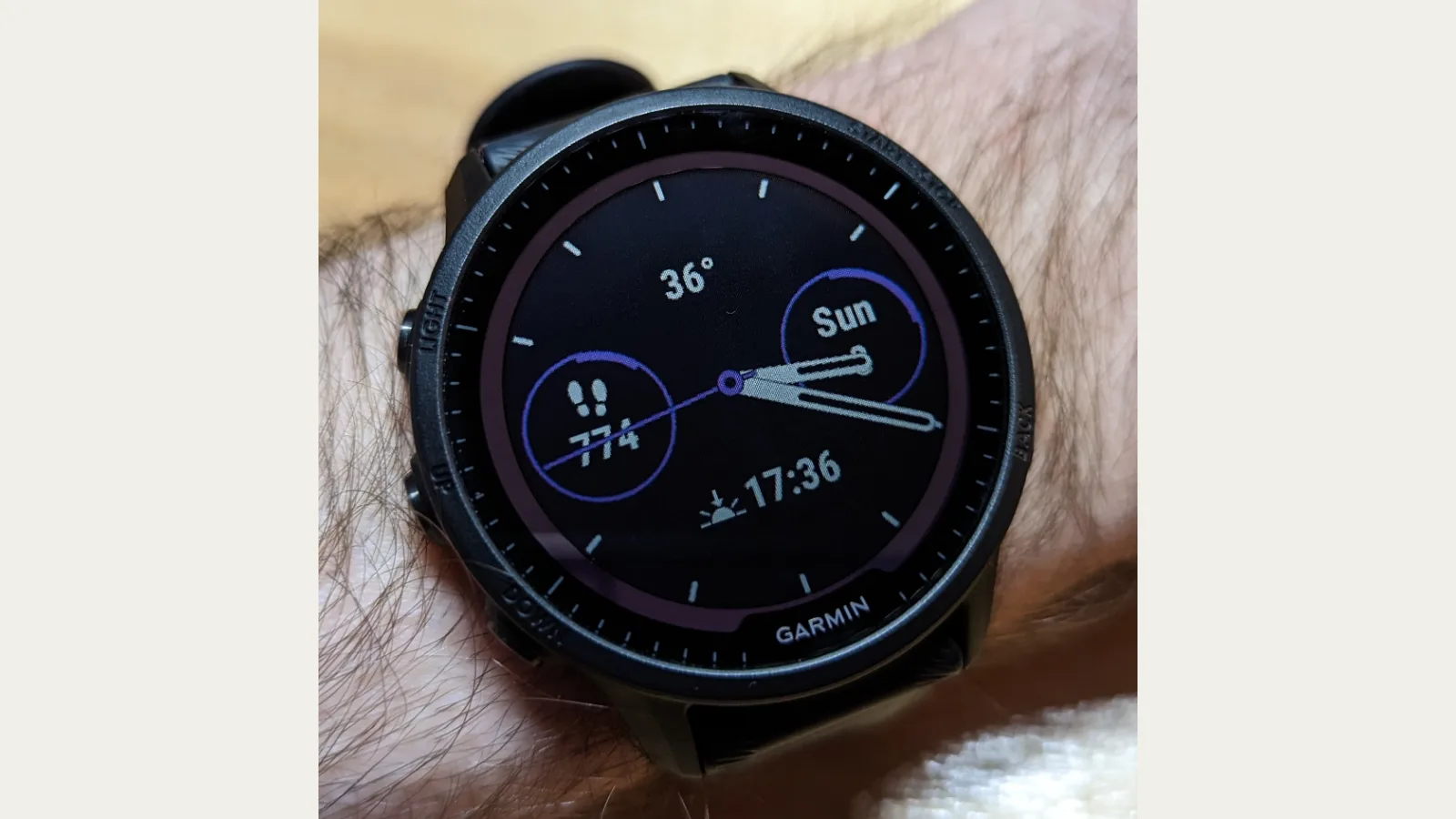
Featured image: Oatberry, CC BY-SA 4.0, via Wikimedia Commons
For most runners the Garmin Forerunner 970 is the better buy than a Fenix; the Fenix 8 and the newer Fenix 9 are the ones to pick if you dive, hike, ski or need serious battery life and a tougher case.
Quick answer Buy the Forerunner if your main sports are running, cycling, swimming and triathlon: it is lighter (56 g versus roughly 73 to 80 g for a 47 mm Fenix 8), slimmer and cheaper, and its tracking is essentially the same. Buy a Fenix if you need a 10 ATM rating and dive modes, a bigger or smaller case (43, 47 or 51 mm), longer battery life or solar charging. The gap in price is real: the Forerunner 970 lists at $749, while Fenix 9 models start around $999.
Forerunner vs Fenix: the core difference
Garmin builds both lines on the same sports software, so training load, recovery metrics, running dynamics, multiband GPS and offline maps are broadly shared. The split is about the body of the watch and who it is aimed at. The Forerunner is Garmin’s dedicated running and triathlon line. The Fenix is its multisport and outdoor flagship, with a heavier, more rugged build.
Reviewers who have worn both come to a similar conclusion. Tom’s Guide said it would buy the Forerunner 970 over the Fenix 8 for its lighter, slimmer design and lower price, while crediting the Fenix with better battery life and a more premium, rugged feel. In a September 2026 follow-up it picked the Forerunner 970 over the Fenix 9 Pro too, calling GPS and heart rate accuracy “pretty much a wash”.
That means you are mostly paying a Fenix premium for hardware, not for better run data. Whether the hardware is worth it depends on how you use the watch.
Spec comparison
| Spec | Forerunner 970 | Fenix 8 (47 mm AMOLED) | Fenix 9 Pro (47 mm) |
|---|---|---|---|
| Case size | 47 mm only | 43, 47 or 51 mm | 43, 47 or 51 mm |
| Case material | Titanium bezel, mostly plastic case | Steel or titanium | Full titanium |
| Display | 1.4 in AMOLED, sapphire | AMOLED or MIP (solar), glass or sapphire | AMOLED or MIP, sapphire |
| Weight with strap | 56 g | About 73 g (titanium) to 80 g (steel) | About 78 g |
| Thickness | 12.9 mm | 13.8 mm | 13.8 mm |
| Smartwatch battery | Up to 15 days | Up to 16 days | Up to 18 days |
| GPS battery | Up to 26 h (GPS only), 21 h (multiband) | Up to 37 h | Up to 32 h (multiband) |
| Water resistance | 5 ATM | 10 ATM, 40 m dive modes | 10 ATM, 40 m dive |
| Flashlight, speaker and mic | Yes | Yes | Yes |
| Approx. US price (launch or from) | $749 (sales to about $649) | $999 launch, now often discounted | From about $1,099 (Pro line) |
Figures are Garmin’s claims as quoted by DC Rainmaker, Tom’s Guide and other reviewers. Battery numbers vary by mode and settings, and prices move often, so check the current listing before you buy.
Where to buy
Compare the same watch on both sites: eBay for pre-owned and vintage pieces, Amazon for new stock.
Garmin Forerunner 970
Garmin Fenix 9 47mm
Garmin Fenix 8 47mm AMOLED Alternative
Garmin Forerunner 570 Alternative
Prices and availability change; check the listing before you buy.
Where the Forerunner 970 wins
Weight is the most noticeable gap. At 56 g the Forerunner 970 is lighter than any Fenix, and on a long run or a swim you feel it. It is also thinner, which matters under a sleeve and on a small wrist.
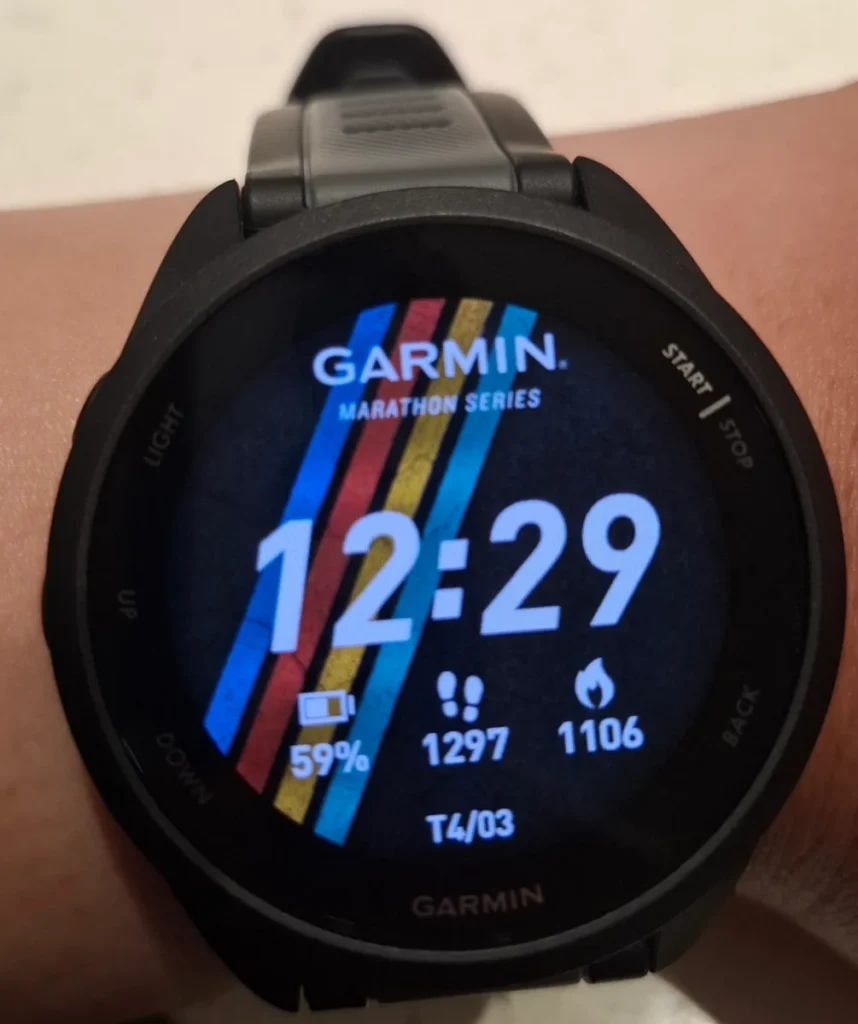
Price is the other big one. The Forerunner 970 launched at $749 in May 2025, and Tom’s Guide reported it dropping as low as $649 during sales. At launch a comparable Fenix 8 cost $999 or more, about $250 above it.
Its display is also bright. DC Rainmaker noted the screen is brighter than previous Forerunners, and at the time of his review he described the 970’s $749 price as effectively a wash with the Fenix 8 on sale at $799. If you want more detail on how the previous generation compares, our Forerunner 265 vs 965 guide covers the older step-up decision.
Where the Fenix wins
Battery life is the clearest advantage. The Fenix 8 47 mm claims up to 37 hours of GPS against 26 hours for the Forerunner 970 in GPS-only mode, and the 51 mm sizes and solar versions go much further. Tom’s Guide found the Fenix 8 lasted six or seven days with the always-on display against four or five for the Forerunner.
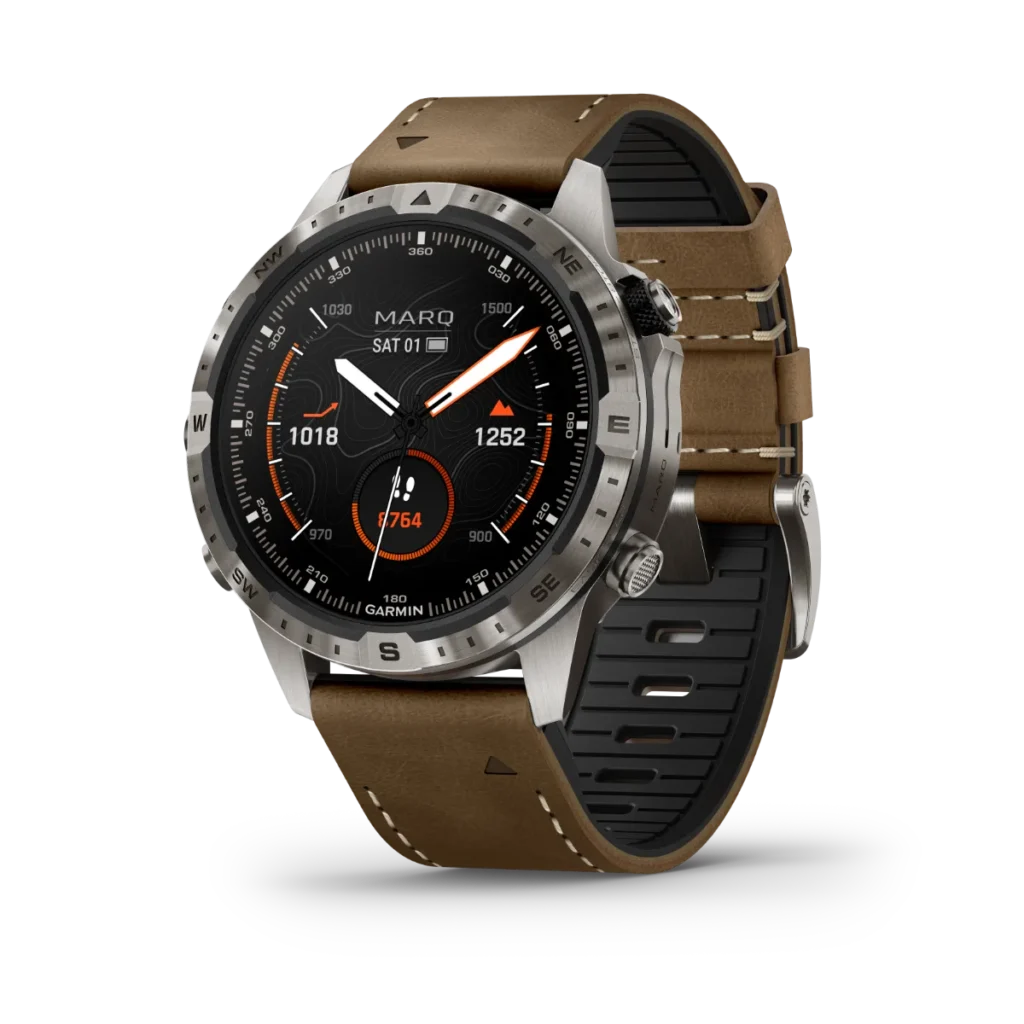
Durability and water rating matter if you are outdoors. The Fenix line carries a 10 ATM rating and 40 m recreational dive and freediving modes, while the Forerunner 970 stops at 5 ATM. The Fenix also offers a full metal case, three sizes and a solar MIP option.
If your adventures are more mountain than road, see our look at the Garmin Fenix 8 Pro.
Features both watches share
Most of the smart features you might assume are Fenix-only are on the Forerunner 970 as well. DC Rainmaker lists an LED flashlight with white and red modes, a speaker and microphone for calls, an ECG app, skin temperature sensing, Garmin Pay and offline music storage. Both use Garmin’s multiband satellite modes, which trade battery life for more accurate tracks in cities and canyons.
Mapping is the one area where Garmin still separates the lines. Both carry full-color topographic maps, but Tom’s Guide said the Fenix 9’s faster map panning and perspective view will not come to the Forerunner 970. Voice notes are another small difference, since DC Rainmaker pointed out the Forerunner 970 lacks them while the Fenix 8 has them.
Size, comfort and everyday wear
The Forerunner 970 comes in a single 47 mm size, so anyone with a small wrist has no option. The Fenix line has three: 43, 47 and 51 mm. The 43 mm is the better answer for smaller wrists, and the 51 mm is the one to pick if you want the biggest screen and the longest battery.
The trade-off is feel. The Forerunner’s plastic case and light strap disappear on the wrist during a run or overnight, which helps if you wear it for sleep tracking. A titanium Fenix looks better with a jacket or at the office, but it is a noticeably more substantial watch. If you want a metal watch that works at dinner, the Fenix is the stronger fit.
What changed in 2026: Fenix 9
Garmin introduced the Fenix 9 in late August 2026, with the 47 mm base model reported as orderable from August 28 at a list price of 999.99 euros in Europe. In the US, Tom’s Guide lists the Fenix 9 as starting at $999 and the Fenix 9 Pro at $1,099. Both come in 43, 47 and 51 mm sizes.
The new generation has a much brighter AMOLED screen, a titanium bezel with sapphire lens and 64 GB of storage, according to early coverage. The Pro adds LTE and satellite connectivity with a full titanium case. Tom’s Guide also said some new map features, such as faster panning and a perspective view, will not come to the Forerunner 970.
The older Fenix 8 is now the value pick in the family. Garmin cut the US price of the Fenix 8 Pro MicroLED 51 mm by $300 to $1,699 earlier in 2026, and AMOLED Fenix 8 models are often discounted. No Forerunner 970 successor had been confirmed in the sources we checked as of November 2026.
Which one should you buy?
Choose the Forerunner 970 if
You mainly run, ride, swim or race triathlons, you want the lightest possible watch, or you want to spend under about $750. Triathlon coverage from The Triathlete also picked the Forerunner 970 as its best for triathlon. Our best Garmin for triathlon and best Garmin for running guides go deeper on this.
Choose a Fenix 8 or Fenix 9 if
You dive or freedive, hike or ski for many hours at a time, want solar charging, need a 51 mm or 43 mm case, or want a metal watch that can double as everyday wear. The Fenix 8 is the budget route; the Fenix 9 is the one to buy if you want the newest display and features.
What about a cheaper Garmin?
If neither is right, the Forerunner 570 is the lower-priced sibling, and our best Garmin watch guide ranks the whole range. Rugged on a budget is a different job again, which our Garmin Instinct 3 review covers.
FAQ
Is the Garmin Forerunner as good as the Fenix?
For running and triathlon tracking, yes. Reviewers describe GPS and heart rate accuracy as essentially a wash between the Forerunner 970 and the Fenix line; the differences are in build, battery life and outdoor and dive features.
Why is the Fenix more expensive than the Forerunner?
You are paying for a tougher case, a 10 ATM rating with dive modes, longer battery life, more size options and, on some models, solar charging or satellite connectivity. The sports software is largely shared.
Is the Forerunner 970 lighter than the Fenix 8?
Yes. The Forerunner 970 weighs about 56 g with its strap, against roughly 73 g for a titanium Fenix 8 47 mm and 80 g for steel, according to Tom’s Guide.
Which has better battery life, Forerunner or Fenix?
The Fenix. A Fenix 8 47 mm claims up to 37 hours of GPS and 16 days as a smartwatch, versus 26 hours and 15 days for the Forerunner 970, and larger or solar Fenix models go further.
Should I buy the Fenix 8 or wait for the Fenix 9?
The Fenix 9 is already on sale as of November 2026, so the choice is now between a cheaper, discounted Fenix 8 and the newer, pricier Fenix 9 with a brighter display. If you do not need the newer features, the Fenix 8 or Forerunner 970 is the better value.
Can you swim with a Forerunner 970?
Yes, it has pool and open-water swim modes with a 5 ATM rating, which is fine for swimming. It does not have the dive modes found on the Fenix.
Sources
- Tom’s Guide: I wore the Garmin Fenix 8 vs. Garmin Forerunner 970 for over a week
- Tom’s Guide: Garmin Fenix 9 Pro vs Garmin Forerunner 970
- DC Rainmaker: Garmin Forerunner 970 In-Depth Review
- Running with Rock: Garmin Fenix 8 vs Forerunner 970
- BadgeHero: The Garmin Fenix 9 Is Official
- Wareable: Fenix 8 Pro MicroLED permanent price cut