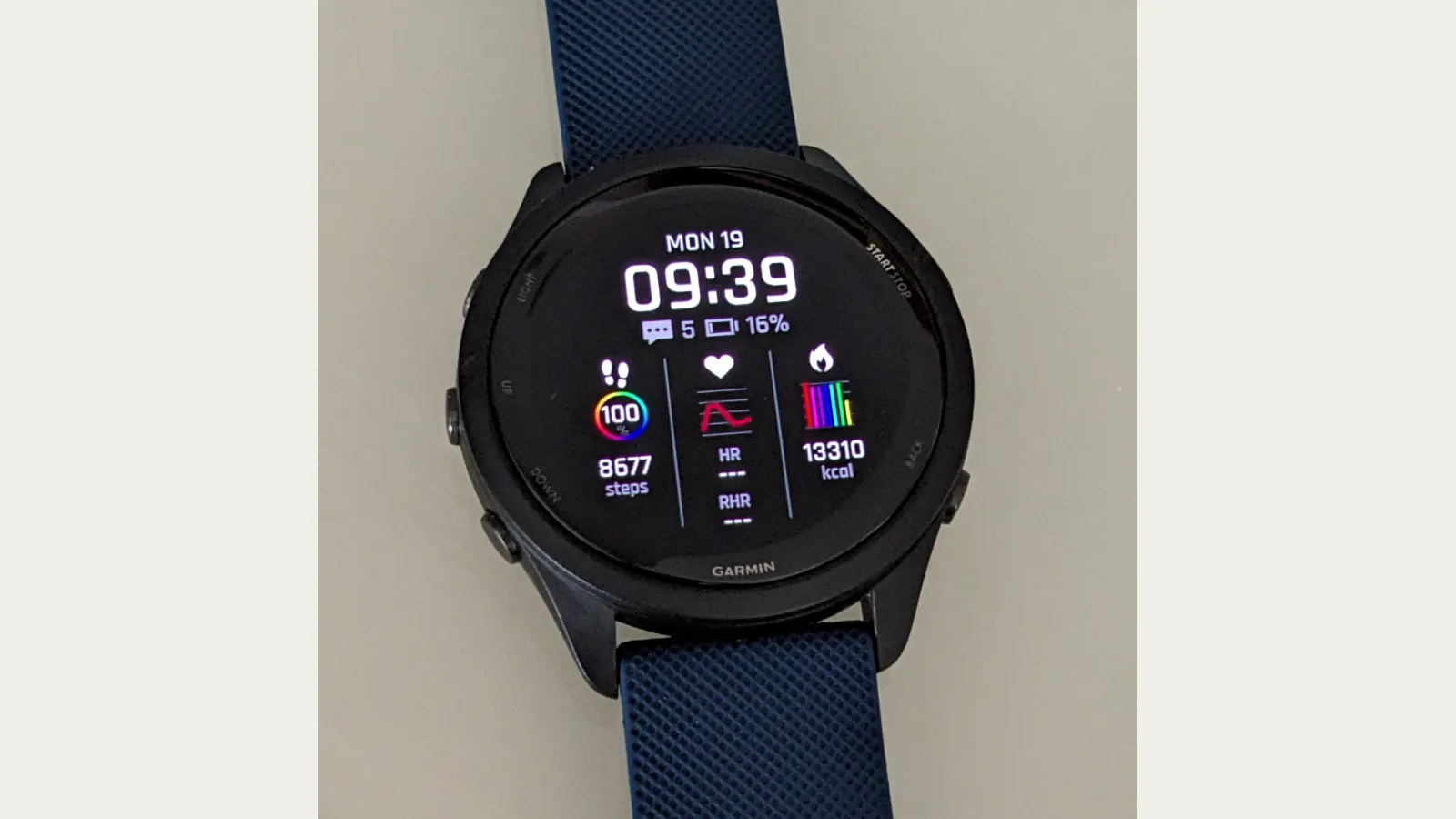
Featured image: 3r1ccc, CC0, via Wikimedia Commons
Garmin makes the broadest range of GPS sports watches of any manufacturer, from the entry-level Forerunner 70 at $249 to the flagship Fenix 9 Pro at roughly $1,100. For most dedicated runners and triathletes, the best Garmin watch is the Forerunner 970; for serious athletes who also hike, ski, or dive, the Garmin Fenix 9 Pro is the definitive choice.
Quick answer The Garmin Forerunner 970 ($749) hits the best balance of AMOLED display, titanium build, ECG sensor, and advanced running analytics without the full Fenix price. If you spend as much time on trails and in the backcountry as on roads, the Fenix 9 Pro is worth the extra cost. For adventurers on a tighter budget, the Instinct 3 AMOLED ($449) is the smartest buy: rugged, accurate, and capable of nearly three weeks of battery without a charger.
Garmin’s lineup can look overwhelming from the outside — the company ships more than a dozen models at any given time, many with overlapping feature sets and similar names. This guide focuses on the six models that represent the best value at each price tier as of late 2026, explains what independent reviewers consistently say about each one, and names the athletes and coaches who actually wear them in competition.
The Current Garmin Lineup: Top Picks at a Glance
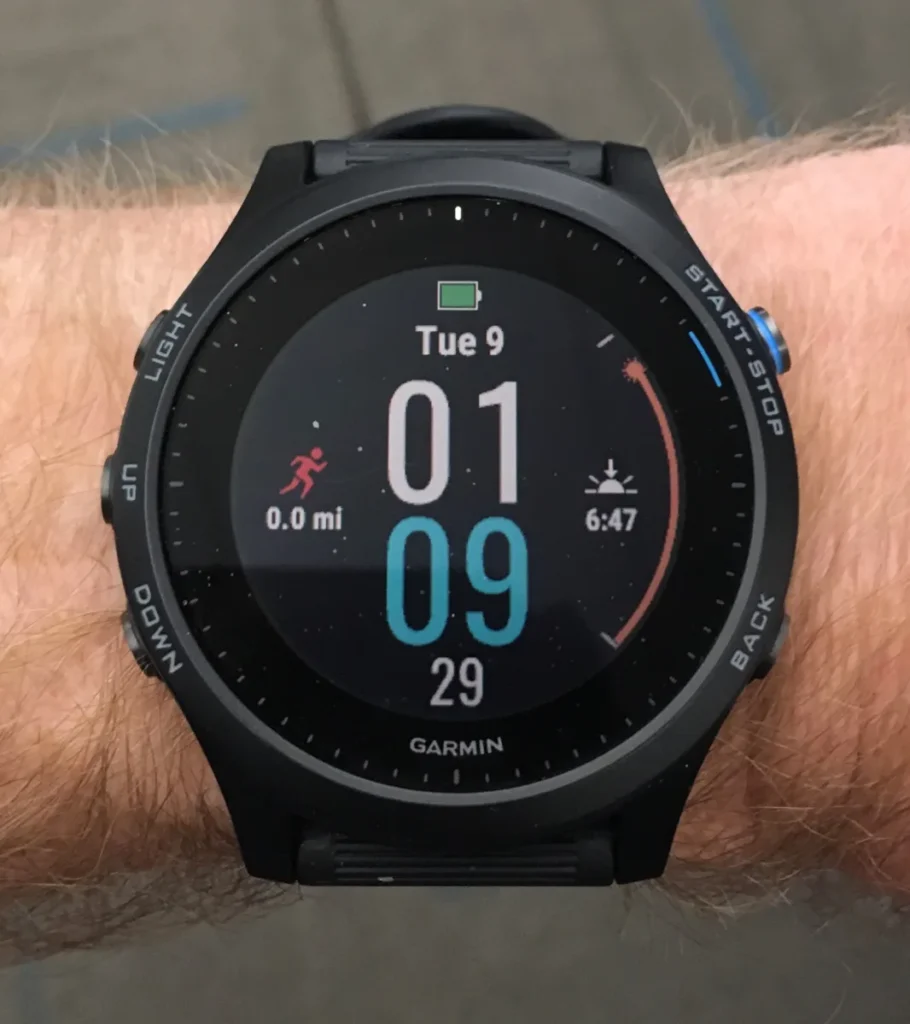
Garmin groups its watches into four main families: Fenix (rugged multisport), Forerunner (structured training), Instinct (outdoor/rugged), and Venu/Vivoactive (lifestyle fitness). The table below shows the current recommended pick at each price point and use case.
| Model | Price (approx.) | Best for | Battery (smartwatch mode) |
|---|---|---|---|
| Fenix 9 Pro | ~$1,100 | Multisport and adventure | 18–31 days |
| Forerunner 970 | $749 | Running and triathlon | 15 days |
| Instinct 3 AMOLED | $449 | Outdoor and rugged use | 18–24 days |
| Venu 4 | $549 | Lifestyle and everyday fitness | 12 days |
| Vivoactive 6 | $299 | Budget fitness tracking | 11 days |
| Forerunner 70 | $249 | Beginner running | 13 days |
Garmin Fenix 9 Pro — Best for Serious Athletes and Adventurers
Announced on August 25, 2026, the Fenix 9 Pro is the most capable watch Garmin has ever made. It carries the first titanium case ever fitted to a Fenix — lightweight and measurably thinner than the steel-cased Fenix 8 — paired with a 3,000-nit AMOLED display that remains readable in direct sunlight. The 47mm and 51mm variants come with 64GB of storage, double the Fenix 8’s 32GB, which means the watch holds full offline maps for multiple continents alongside up to 7,000 songs.
Navigation has improved significantly over its predecessor. A new map engine with 50% more RAM makes panning up to 30% faster, and a perspective view renders terrain in three dimensions rather than as a flat grid. For serious backcountry users, the dive computer mode covers both scuba and apnea to 40 meters, and 10 ATM water resistance gives it real underwater credibility. The Fenix 9 Pro inReach variants add satellite messaging and emergency SOS anywhere on Earth, without a cell signal.
| Spec | Fenix 9 Pro (47mm AMOLED) |
|---|---|
| Case material | Titanium |
| Case sizes available | 43mm, 47mm, 51mm |
| Display | AMOLED, 454×454 px, 3,000 nits, sapphire |
| Battery — smartwatch | 18 days (AMOLED); up to 57 days on Solar variants |
| Battery — GPS mode | Up to 32 hours normal; 87 hours max-battery mode |
| GPS | Multi-band GNSS (GPS, GLONASS, Galileo, QZSS, BeiDou) |
| Water resistance | 10 ATM; dive computer to 40m |
| Storage | 64 GB |
| Sensors | ECG, optical and electrical heart rate, SpO2, barometric altimeter, compass, temperature, ambient light |
| Price (approx.) | ~$1,100 AMOLED; inReach variants higher |
Where to buy
Compare the same watch on both sites: eBay for pre-owned and vintage pieces, Amazon for new stock.
Garmin Fenix 9 Pro
Garmin Forerunner 970 Alternative
Garmin Instinct 3 AMOLED Alternative
Garmin Venu 4 Alternative
Prices and availability change; check the listing before you buy.
DC Rainmaker and DesFit, who received early access ahead of the August 2026 launch, highlighted the improved map performance and the faster processor as the most practical upgrades from the Fenix 8 Pro. The new rucking feature — which lets athletes adjust pack weight mid-activity and recalculates effort targets based on loads up to 100kg — is one of several additions aimed squarely at military and mountaineering users. Reviews based on Garmin’s specs and extended pre-launch access consistently rate the Fenix 9 Pro as the best GPS sports watch available at its price point.
Garmin Forerunner 970 — Best for Runners and Triathletes
Released in May 2025 at $749, the Forerunner 970 is the most sophisticated dedicated running watch Garmin makes. Its titanium bezel and sapphire crystal give it a premium feel while keeping weight at 56 grams — lighter than the Fenix 9 Pro and more appropriate on the wrist for everyday wear. The AMOLED touchscreen runs at 454×454 resolution, and an ECG sensor — one of the first fitted to any Forerunner — can screen for signs of cardiac arrhythmia between workouts.
The 970 carries 32GB of storage for offline maps, music, and routes, plus a built-in microphone and speaker for taking calls from the wrist. A built-in LED flashlight is a practical addition for pre-dawn training runs. Battery life is rated at 15 days in smartwatch mode and around 26 hours with GPS active, which is sufficient for a full Ironman and most ultra distances without charging mid-race.
| Spec | Forerunner 970 |
|---|---|
| Case material | Titanium bezel, polymer body |
| Case size | 47mm |
| Weight | 56g |
| Display | AMOLED, 454×454 px, 1.4 inch, sapphire |
| Battery — smartwatch | 15 days |
| Battery — GPS mode | ~26 hours |
| Water resistance | 5 ATM (50m) |
| Storage | 32 GB |
| Sensors | ECG, heart rate, SpO2, barometric altimeter, temperature, ambient light, accelerometer |
| Price (approx.) | $749 |
In the ongoing Garmin vs Apple Watch debate, the Forerunner 970 consistently comes out ahead for serious training use: its running dynamics, VO2 max estimation, and training load metrics are more granular than what Apple Watch Ultra 2 provides, and GPS accuracy during long outdoor runs holds up better through tree cover and urban canyons when multi-band GNSS is active. Apple Watch leads on cellular independence and third-party app depth — for a watch you’d also use as a communication device, that matters.
Garmin Instinct 3 — Best Outdoor Watch on a Budget
The Instinct 3, launched in 2024, has become Garmin’s best-selling watch in the outdoor segment. Its fiber-reinforced polymer case and 100-meter water resistance deliver Fenix-grade durability at roughly a third of the Fenix price. The AMOLED variant ($449) provides a vivid display in gesture-on mode to preserve battery; the Solar MIP version (around $349) delivers battery life well beyond a month under normal sun exposure — up to 40-plus days on the 50mm model.
The trade-offs are worth stating clearly: no touchscreen (all navigation uses five physical buttons), no offline maps, and no voice assistant. Reviewers at PhoneArena, who tested the AMOLED version extensively, called the screen a major upgrade over the Instinct 2 and praised GPS and heart rate accuracy. The lack of a touchscreen is consistently flagged as the watch’s most divisive characteristic. For hikers, trail runners, and anyone needing a durable GPS watch that survives multi-day trips without a charger, those compromises are usually acceptable. The built-in torch is a frequently praised feature that many Fenix models still lack.
For a deeper look at how the Instinct 3’s sub-models differ, the dedicated Garmin Instinct 3 review breaks down which of the six variants suits which type of user.
| Spec | Instinct 3 AMOLED | Instinct 3 Solar MIP |
|---|---|---|
| Case sizes | 45mm or 50mm | 45mm or 50mm |
| Display | AMOLED, no touchscreen | MIP Solar, no touchscreen |
| Battery — smartwatch | 18 days (45mm) to 24 days (50mm) | 40+ days with solar |
| GPS | Dual-band | Dual-band |
| Water resistance | 100m | 100m |
| Price (approx.) | $449 | ~$349 |
Garmin Venu 4 — Best Garmin Lifestyle Watch
The Venu 4 ($549) is Garmin’s answer to the question of what a premium fitness tracker looks like when the priority is a watch you’d wear to work as willingly as to the gym. The 41mm and 45mm case options fit a wider range of wrists than the sport-focused lineup, the metal body looks appropriate off the gym floor, and the Elevate Gen 5 heart-rate sensor is Garmin’s most accurate optical sensor to date. It also carries a speaker and microphone for phone calls from the wrist, and 32GB of storage supports offline music from Spotify, Amazon Music, or Deezer. Battery life of up to 12 days is shorter than the Forerunner or Instinct, but reasonable for an AMOLED watch worn constantly. Garmin Pay contactless payments are built in.
Garmin Vivoactive 6 and Forerunner 70 — Best Budget Options
The Vivoactive 6 ($299) and Forerunner 70 ($249) are the current best-value entry points into Garmin’s ecosystem. The Vivoactive 6, at just 36 grams, is one of the lightest AMOLED watches Garmin makes, with 11-day battery life and full Body Battery, HRV, sleep, and stress tracking. It has no speaker or microphone and no running-specific coaching — it suits casual exercisers who want Garmin’s health data platform without the training focus.
The Forerunner 70 is designed for runners just starting structured training. Its Training Readiness score, Garmin Coach guided plans, and daily suggested workouts provide more structure than almost any app-only approach at $249. It lacks onboard storage for music, which makes solo gym sessions less convenient, but for road runners training by GPS pace and heart rate it covers all the essentials, including multi-band GPS accuracy on the 42.6mm frame.
Who Wears Garmin? Athletes and Ambassadors
Garmin has an extensive sponsorship presence across endurance sports. The company serves as the official technology partner of the Bowerman Track Club, the professional US distance running group whose roster has included 1,500m Olympic medalist Matt Centrowitz, 5,000m specialist Karissa Schweizer, Olympic steeplechase finalist Courtney Frerichs, and distance runner Evan Jager. Club members use Garmin Forerunner watches and the Garmin Clipboard Coaching app as part of their day-to-day training and coach communication setup.
In triathlon, Garmin sponsors several of the sport’s top professional competitors. Anne Haug of Germany, who won the Ironman World Championship in Kona in 2019, trains and races with Garmin equipment. Taylor Knibb, Leon Chevalier, and Magnus Ditlev are also listed among Garmin-sponsored professional triathletes as of early 2024. These athletes cite GPS accuracy during the run segment and reliable heart rate data on the bike as the primary reasons for using Garmin over competing platforms.
At the 2026 London Marathon, photographers covering the elite field reported that Sabastian Sawe — the men’s race winner in 1:59:30 — appeared to be wearing a watch closely resembling a Garmin Forerunner 245 model. Garmin has not officially confirmed a sponsorship arrangement with Sawe, and this identification is reported as an observed match rather than a confirmed partnership. The broader pattern among competitive distance runners at major road races shows Garmin Forerunner models on a plurality of elite wrists, alongside Coros and Polar.
How to Choose the Right Garmin Watch
The clearest starting point is activity type. Runners who follow structured plans and race regularly get the most from the Forerunner line’s training analytics — the 970 for those who want flagship features, the 70 for beginners. Hikers, trail runners, and anyone doing ski seasons or open-water swimming will value the ruggedness and battery life of the Fenix 9 Pro or Instinct 3 more than the Forerunner’s running specifics. If the watch will primarily sit on your wrist at the office and get a 45-minute run a few times a week, the Venu 4 or Vivoactive 6 are the more practical choices.
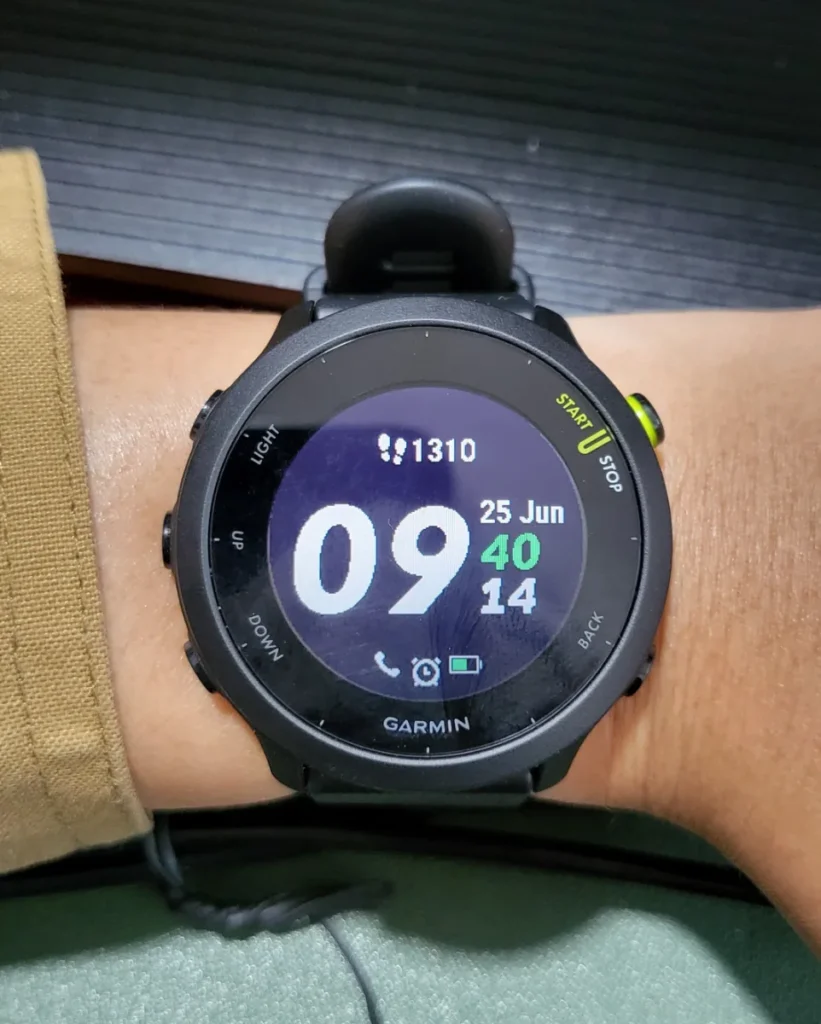
Battery life is a meaningful differentiator between the AMOLED and solar MIP variants across the range. The Instinct 3 Solar, Fenix 9 Solar, and Enduro 3 — which targets ultrarunners with over 300 hours of GPS battery in solar mode — represent a fundamentally different philosophy: you trade screen quality for a device that genuinely does not need to be charged for weeks at a stretch. For multi-day backcountry expeditions that philosophy makes sense. For runners charging every two weeks anyway, the AMOLED models offer enough battery and a substantially better screen.
The price gap between tiers is less about hardware than about which training and navigation features are included. Moving from the Vivoactive 6 to the Forerunner 970 adds ECG, maps, advanced running dynamics, and titanium build at roughly 2.5 times the cost. Moving from the Forerunner 970 to the Fenix 9 Pro adds a bigger case, 10 ATM dive rating, the inReach satellite option, and Fenix-grade navigation at roughly 1.5 times the Forerunner’s price. For the complete brand context, the Garmin brand hub covers every current model Garmin makes, including those not featured in this guide.
FAQ
What is the best Garmin watch to buy in 2026?
For most runners and triathletes, the Garmin Forerunner 970 at $749 is the best balance of AMOLED display, titanium build, ECG, and advanced training analytics. For serious athletes who also hike, ski, or adventure in remote terrain, the Fenix 9 Pro at roughly $1,100 is the more capable overall package. The Instinct 3 AMOLED at $449 is the smartest choice for outdoor users who prioritize battery life and ruggedness over screen quality.
How does Garmin compare to Apple Watch for athletes?
Garmin consistently outperforms Apple Watch for structured training: multi-band GPS accuracy over long outdoor runs is better, training load and recovery metrics are more granular, and battery life is significantly longer across all models. Apple Watch has the advantage in cellular independence, third-party app depth, and integration with iPhone notifications. For athletes whose primary use is training and racing, Garmin is the better tool; for someone who wants one device for both training and daily communication, the choice depends on how much the smartwatch features matter.
Which Garmin watch has the longest battery life?
The Garmin Enduro 3, designed specifically for ultra-running and multi-day events, claims over 320 hours of GPS battery life in solar mode. Among the mainstream 2026 lineup, the Fenix 9 Solar variants reach up to 57 days of smartwatch battery, and the Instinct 3 Solar reaches 40-plus days on the 50mm model. The AMOLED models — Fenix 9 Pro, Forerunner 970, Venu 4 — offer 12 to 31 days depending on size and settings.
Do professional athletes wear Garmin watches?
Yes. Garmin is the official technology sponsor of the Bowerman Track Club, whose professional members have included Matt Centrowitz, Karissa Schweizer, Evan Jager, and Courtney Frerichs. In triathlon, Garmin sponsors Anne Haug, Taylor Knibb, Magnus Ditlev, and Leon Chevalier, among others. Elite distance runners wearing Garmin Forerunner models are routinely photographed at major international road races.
What is the difference between the Garmin Fenix and Forerunner?
The Fenix is built for multisport use across running, hiking, swimming, skiing, climbing, and diving, with a more rugged case, offline maps as a core feature, and a wider range of outdoor activity profiles. The Forerunner is optimized specifically for running and triathlon training, offering more detailed running dynamics, a lighter body, and purpose-built coaching tools. Both lines support GPS, heart rate, and advanced training metrics; the Fenix 9 Pro’s 10 ATM water resistance and 64GB map storage are the clearest differentiators at the top of the range.
Is the Garmin Fenix 9 worth upgrading from the Fenix 8?
The Fenix 9 Pro introduces a titanium case (the first on any Fenix), a 3,000-nit display (up from roughly 1,000 nits on the Fenix 8), double the storage at 64GB, faster map rendering, and updated training features including stamina zones and rowing VO2 max. If you rely heavily on navigation or frequently train in bright sunlight, the display improvement alone justifies serious consideration. For casual users with a fully functioning Fenix 8, waiting for the next generation is a reasonable position.
Sources
- Android Central: The Garmin Fenix 9 raises the bar with faster maps and smarter training
- TechRadar: The best Garmin watches 2026
- Wareable: Best Garmin watch 2026
- Garmin Newsroom: Garmin named official technology sponsor of the Bowerman Track Club
- Gamerasnap: London Marathon 2026 — elite runner watches
- PhoneArena: Garmin Instinct 3 AMOLED review