
Featured image: BlakkPrissm, CC0, via Wikimedia Commons
Whoop and Garmin solve different problems: Whoop is a screenless, subscription-only strap built around sleep, strain and recovery, while Garmin makes GPS sports watches you buy once and use for training. If you want the one most serious athletes train with, it is Garmin; if you want the best passive recovery coaching, it is Whoop, and plenty of athletes wear both.
Quick answer Pick Garmin (for example the Forerunner 970 or a fenix) if you want built-in GPS, a screen, maps and a one-time purchase. Pick Whoop 5.0 or Whoop MG if you mainly care about sleep, recovery and daily strain and are happy to pay a yearly membership. Whoop has no GPS and no display, so most runners and triathletes who use it keep a Garmin or similar watch for the actual workout.
Whoop vs Garmin at a glance
The comparison is a little unfair by design, because the two are not the same kind of product. Whoop sells a membership and includes the hardware. Garmin sells hardware and gives you the core app for free. The table below uses Whoop’s current 5.0 and MG generation (launched in May 2025) against two current Garmin watches: the Forerunner 970 and the newer fenix 9, which went on sale at the end of August 2026.
| Spec | Whoop 5.0 / MG | Garmin Forerunner 970 | Garmin fenix 9 |
|---|---|---|---|
| Type | Screenless strap (wrist or bicep) | AMOLED running and triathlon watch | AMOLED multisport and outdoor watch |
| Built-in GPS | No (uses your phone) | Yes | Yes |
| Display | None | AMOLED, sapphire lens, titanium bezel | AMOLED, sapphire lens |
| Battery claim | 14+ days; up to about a month with the Wireless PowerPack | Multi-day; varies with GPS use | Up to 29 days in smartwatch mode (largest size) |
| Water protection | IP68; strap suited to pool and sea swimming | Not verified here | 40 m dive rating |
| Standout health tools | Strain, Recovery, Sleep; ECG and blood pressure insights on MG | ECG, training readiness, Body Battery | Stamina zones and stamina curve; Garmin health suite |
| Subscription | Required: One $199, Peak $239, Life $359 per year | None for core features | None for core features |
| Approx. price | Hardware included with membership | About $650 (US launch price) | About $1,000 (fenix 9); about $1,100 (fenix 9 Pro) |
Where to buy
Compare the same watch on both sites: eBay for pre-owned and vintage pieces, Amazon for new stock.
Garmin Forerunner 970
Garmin Forerunner 570 Alternative
Garmin Venu 4 Alternative
Garmin Index Sleep Monitor Alternative
Prices and availability change; check the listing before you buy.
Whoop’s membership prices are the launch figures from May 2025, and Garmin’s are US launch prices, so check current listings before you buy. Whoop’s MG model sits in the top Life tier, which is where its ECG and blood pressure features live.
Which do athletes actually wear?
Both brands have well-documented athlete ties, though a sponsorship is not the same as “wears it every day”. Whoop leans on team sport and golf: Cristiano Ronaldo was named a global ambassador and investor in May 2024, and the same announcement listed Patrick Mahomes, Michael Phelps, Eli Manning and Rory McIlroy as ambassador-investors. Whoop has also been the PGA Tour’s official fitness wearable since the partnership announced in early 2021, and became the Ferrari Formula 1 team’s health and fitness wearable partner in January 2026 (reported on its Wikipedia entry).
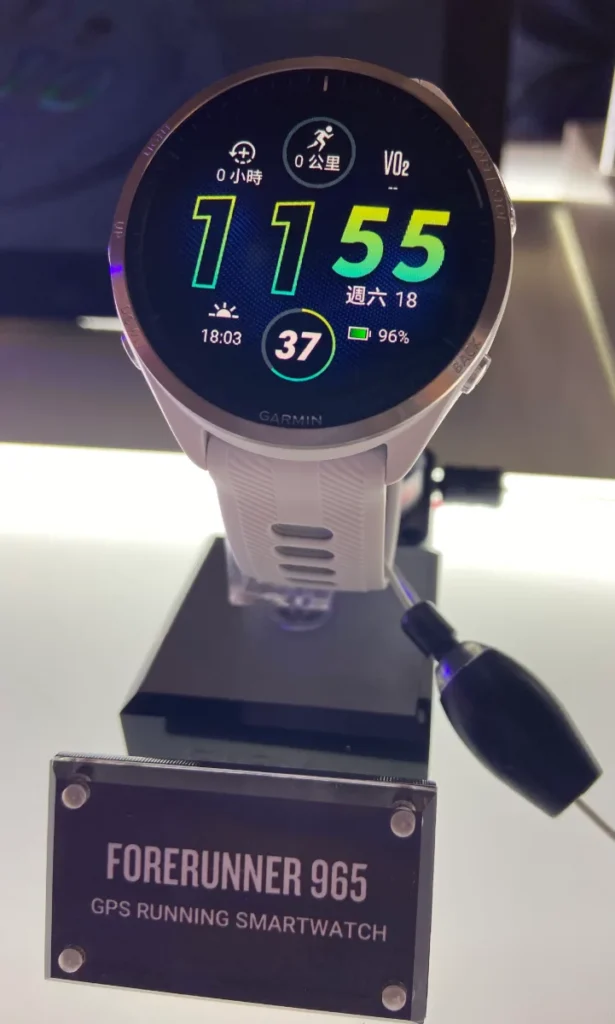
Garmin’s roots are in endurance sport. It became an official sponsor of the Professional Triathletes Organisation in 2023, with Patrick Lange and Anne Haug among its sponsored athletes at the time. Garmin’s own cycling and triathlon pages have also listed Taylor Knibb and Dorian Coninx as sponsored athletes using Forerunner and fenix watches. For a runner, rider or triathlete, the Garmin is usually the device in the race, and Whoop, where used, is the overnight and recovery layer.
That split shows up in how the products are built. Whoop is designed to be worn all day and night without being looked at. Garmin is designed to be looked at during the session, with live pace, heart rate, power and maps. Ronaldo, for example, has said he wears Whoop while training, sleeping and recovering, but a football pitch does not need a map.
Battery life and charging
Whoop claims 14+ days per charge, and the optional Wireless PowerPack lets you top it up while the strap stays on your wrist, which is its best practical trick. Independent reviewers have reported shorter real-world runs in some cases, so treat 14 days as a ceiling rather than a promise.

Garmin’s battery depends heavily on model and mode. The fenix 9 claims up to 29 days in smartwatch mode on its largest size, and a solar fenix 9 Pro claims far more. The catch is that you take the watch off to charge it, and heavy GPS use drains it much faster than the headline number. Whoop wins on convenience, Garmin on sheer endurance.
GPS, heart rate and accuracy
This is where Garmin pulls clearly ahead for training. It has built-in GPS on its watches, offline maps on the higher-end models, and a long record of use by runners and cyclists. Whoop has no built-in GPS at all; route and pace come from your phone or another device recording alongside it.
On heart rate, the picture is more nuanced. One detailed review found Whoop’s bicep readings accurate enough for strain and better than a Garmin wrist sensor, but wrist readings on Whoop were less reliable, including false peaks during hard HYROX-style sessions. The same reviewer recommends a chest strap for pacing on either brand. Wrist optical heart rate is imperfect everywhere, so serious interval work is best done with a strap.
Sleep, recovery and health features
Whoop’s sleep and recovery coaching is its core, and Wareable judged it the more accurate of the two for sleep. Garmin’s wrist-based sleep tracking has tended to overestimate sleep, which is why Garmin built the Index Sleep Monitor, an armband that feeds its Body Battery and Training Readiness scores. In one long review, its restorative sleep averages came out nearly identical to Whoop’s over the same period.
The Index Sleep Monitor costs about $150 to $170 depending on the source, has no subscription, and has a modest battery (Garmin claims up to seven days; one reviewer saw roughly four nights). It does not log workouts, though, and Training Readiness only updates when you also have a synced Garmin watch.
On medical-style features, the Whoop MG adds an ECG and blood pressure insights. Whoop says the blood pressure feature is not a medical device, and one reviewer found the readings needed periodic cuff calibration and were best used as a trend. Garmin offers ECG on several of its watches, such as the Forerunner 970 and Venu 4. Treat all of these as screening aids rather than diagnoses.
Price and subscriptions
Whoop is cheaper on day one and costlier over time. At $199 to $359 a year, three years of the Life tier costs more than a Forerunner 970 at its roughly $650 launch price. Stop paying and the strap stops being useful.
Garmin’s range is wide. The Forerunner 570 launched at about $550, the Venu 4 at about $450, and the Instinct 3 range at roughly $400 to $550. The fenix 9 starts around $1,000, which is about $200 less than the fenix 8 Pro’s launch price. Some Garmin extras, such as satellite messaging and chest straps, cost more, but core features do not need a subscription. For a broader look at the range, see our guide to the best Garmin watch.
Build, comfort and ecosystem
Whoop is light, has no screen to snag on kit, and you can wear it on the wrist or on the bicep. That makes it easy to forget, which is the point. Garmin’s watches are bigger and bolder, with sapphire lenses and titanium bezels on the upper models, and they double as everyday smartwatches with music, payments and notifications.
Garmin’s ecosystem is the wider one, with Connect IQ apps and links to Strava and TrainingPeaks. Whoop’s app is cleaner and more coaching-focused, but it is a closed world. If you are comparing Garmin against a mainstream smartwatch instead, read our Garmin vs Apple Watch comparison.
Who should buy which
Buy Garmin if you train for races, need GPS and a screen, hate subscriptions, or want one device for everything. The Forerunner 970 suits runners and triathletes; the Instinct 3 suits rugged outdoor use on a smaller budget.
Buy Whoop if you lift, play team sport or just want a nudge on sleep and recovery, and you do not need to see data during the session. It also suits people who find a watch uncomfortable in bed.
Buy both if you are a serious endurance athlete who wants race-day data and detailed overnight recovery. It is the most complete setup, and the most expensive. If you would rather stay with watch-first brands, Suunto and Polar are also worth a look.
FAQ
Is Whoop better than Garmin?
Neither is better overall. Whoop is better for passive sleep and recovery coaching, and Garmin is better for GPS, workout tracking and battery longevity without a subscription.
Is Whoop worth it if I already have a Garmin?
It can be if sleep and recovery guidance matter to you and a wrist watch is uncomfortable overnight. Many athletes wear both, but it adds a yearly fee of $199 to $359.
Does Whoop have GPS?
No. Whoop 5.0 and MG have no built-in GPS and no screen, so route and pace data come from your phone or another device recording the same session.
Can Garmin do what Whoop does?
Mostly, yes. Body Battery, Training Readiness and sleep scoring cover similar ground, and Garmin’s Index Sleep Monitor is a screenless band aimed at the same overnight tracking, though it does not log workouts.
Which is more accurate, Whoop or Garmin?
Garmin is stronger for GPS. For heart rate, Whoop on the bicep did well in one detailed review, but wrist readings on both brands can slip during hard intervals, so a chest strap is the safer reference.
Which do professional athletes use?
Both. Whoop has ambassadors such as Cristiano Ronaldo and a PGA Tour partnership, while Garmin sponsors many triathletes and the PTO’s transition area. Sponsorship does not always mean daily use.
Sources
- Wareable: Whoop vs Garmin
- the5krunner: WHOOP 5.0 and MG review for athletes
- Business Wire: WHOOP unveils WHOOP 5.0 and WHOOP MG
- Wareable: Garmin fenix 9 and 9 Pro launch
- Garmin: named an official sponsor of the Professional Triathletes Organisation
- Business Wire: WHOOP announces global partnership with Cristiano Ronaldo