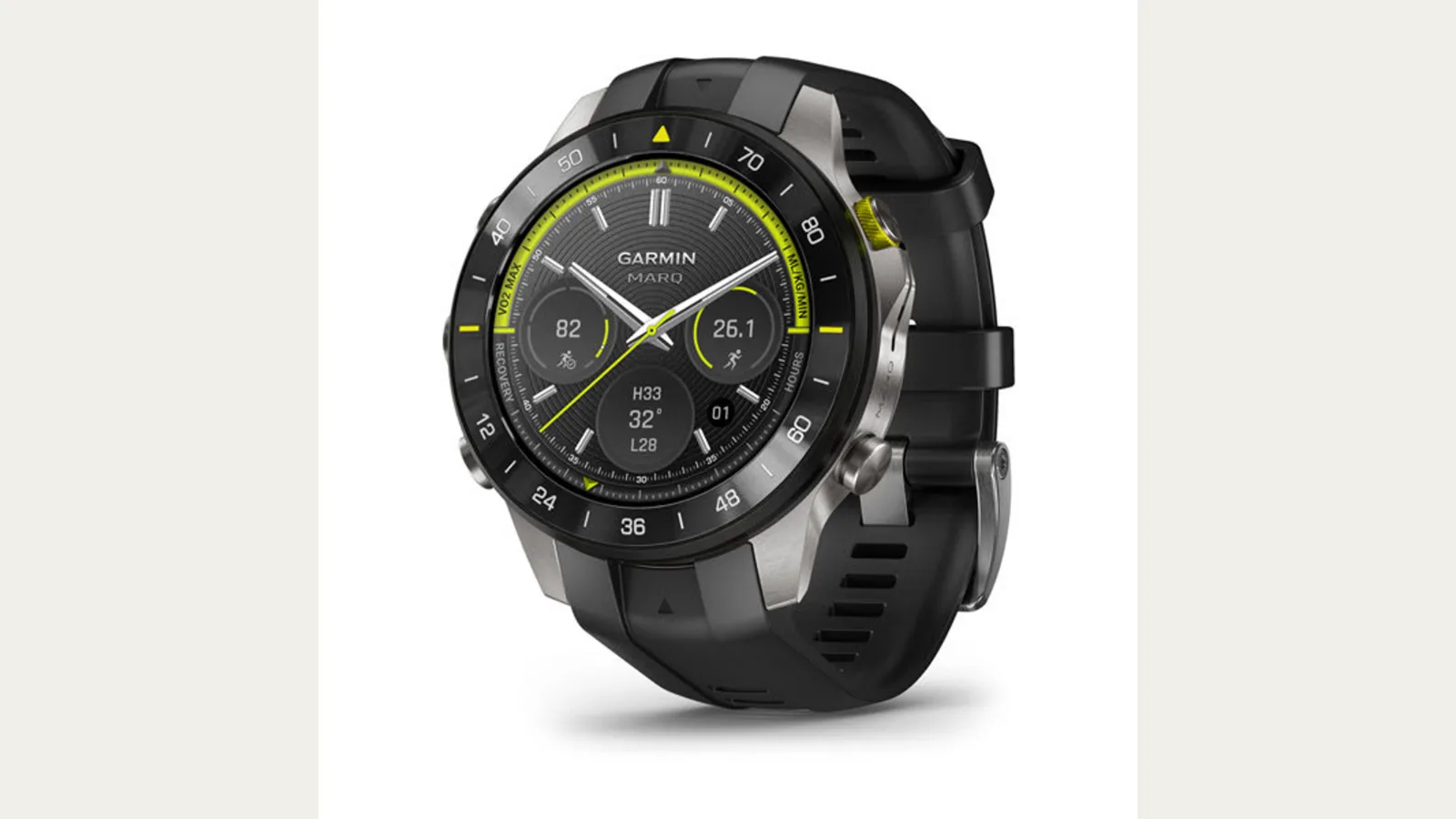
Featured image: Garmin
The Garmin MARQ is Garmin’s luxury smartwatch line: a 47 mm Grade 5 titanium case, ceramic bezel, sapphire lens and AMOLED display wrapped around the same GPS and training software as the Fenix range. The current model is the MARQ (Gen 3), launched on 13 October 2026 in six editions from $2,500 to $3,100.
Quick answer The MARQ is for people who want Garmin’s top-tier sports watch in a dressier, more expensive package. Gen 3 adds LTE and satellite messaging, a flashlight and a 40 m dive computer. The older Gen 2 is still sold for about $600 less and keeps the core training tools. Most confirmed wearers are campaign ambassadors, not celebrity spottings.
What is the Garmin MARQ?
Garmin introduced the MARQ in 2019 as a “modern tool watch” collection. The idea was one premium watch for each of the brand’s core activities: aviation, driving, sailing, outdoors and sport. It has stayed a small, expensive line sitting above the Fenix, built around materials rather than new sensors.
Three generations now exist. The original arrived in 2019, Gen 2 followed in October 2022 with a 46 mm titanium case and an AMOLED screen, and Gen 3 landed in October 2026. Garmin’s Gen 2 launch release put prices at $1,900 to $2,400 for five models, which is a useful baseline for how much the line has moved up.
What you are paying for is mostly the case and finish. Every MARQ uses Grade 5 titanium, a sapphire lens and a ceramic bezel with a design unique to each edition. Software and GPS performance are close to what the Fenix gives you for far less money, so the MARQ is a style and materials decision first.
MARQ (Gen 3) key specs
Gen 3 is built on Fenix 9 software and hardware, with some MARQ-only additions. The headline changes from Gen 2 are a much larger 1.4-inch AMOLED display, built-in LTE and inReach satellite connectivity, a speaker and microphone, a front LED flashlight, and an ECG app in supported regions. Garmin says the display is the biggest yet on a MARQ.
| Spec | MARQ (Gen 3) | MARQ (Gen 2) |
|---|---|---|
| Case size | 47 mm, about 15 mm thick | 46 mm |
| Case material | Grade 5 titanium, ceramic bezel, sapphire lens | Grade 5 titanium, ceramic bezel, sapphire lens |
| Display | 1.4 in AMOLED, 454 x 454 | 1.2 in AMOLED |
| Storage | 128 GB, worldwide topo maps | 32 GB |
| Battery (smartwatch mode) | Up to 18 days per Garmin; roughly 4 to 6 days always-on per DC Rainmaker | Up to 16 days per Garmin |
| Water resistance | Sealed buttons; rated for dives to 40 m; case about 100 m per DC Rainmaker | Not stated in Garmin’s launch release |
| Connectivity | Multiband GPS, LTE and satellite messaging with a paid plan | Multiband GPS, phone-connected |
| Weight | About 86 g | About 84 g |
| Approx. price | $2,500 to $3,100 | $1,900 to about $3,200 (varies by edition) |
Figures for weight and the Gen 2 price list come from the5krunner’s comparison, and the case-thickness figure is repeated by Gadgets and Wearables and by readers of the DC Rainmaker review. Garmin’s own pages do not list weight or a formal water rating, so treat those as reported.
Where to buy
Compare the same watch on both sites: eBay for pre-owned and vintage pieces, Amazon for new stock.
Garmin MARQ Athlete (Gen 3)
Garmin MARQ Athlete (Gen 2) Alternative
Garmin Instinct 3 Alternative
Prices and availability change; check the listing before you buy.
The six Gen 3 editions and which to pick
All six share the same case and electronics. What changes is the bezel, the strap and the software loaded for a specific activity. That makes the choice simpler than it looks: pick the edition whose extra features you will use, or the one whose look you like best.
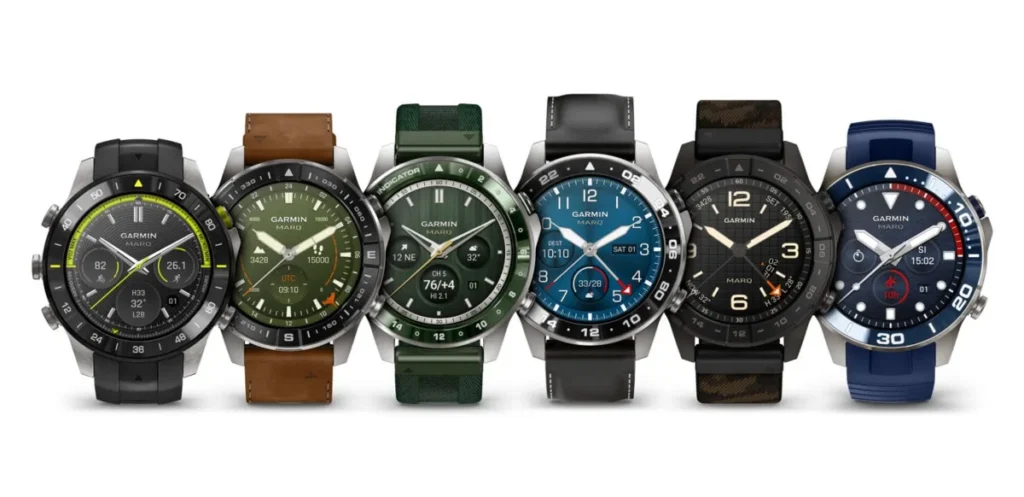
Athlete ($2,500)
The entry point, with a silicone strap and a ceramic bezel carrying a VO2 max scale. It leans toward running and training. DC Rainmaker found the yellow-green accents a little dated, which is a matter of taste.
Adventurer ($2,700)
A 360-degree compass bezel and an Italian leather strap with a hybrid backing, plus a silicone strap in the box according to that review. It is the one DC Rainmaker said he would buy himself, mainly for how it looks.
Golfer ($2,800)
A green bezel with an 18-hole indicator and a woven strap. Course data and Virtual Caddie features need a Garmin Golf membership, so check the running cost.
Aviator, Commander and Diver ($3,100 each)
The Aviator has a polished black ceramic bezel with UTC markings, a calfskin strap and aviation maps. The Commander has a matte black bezel, a camo-weave band and tactical tools from the Tactix line. The Diver is new, replaces the Gen 2 Captain, and adds scuba and freediving modes, dive maps and boating features.
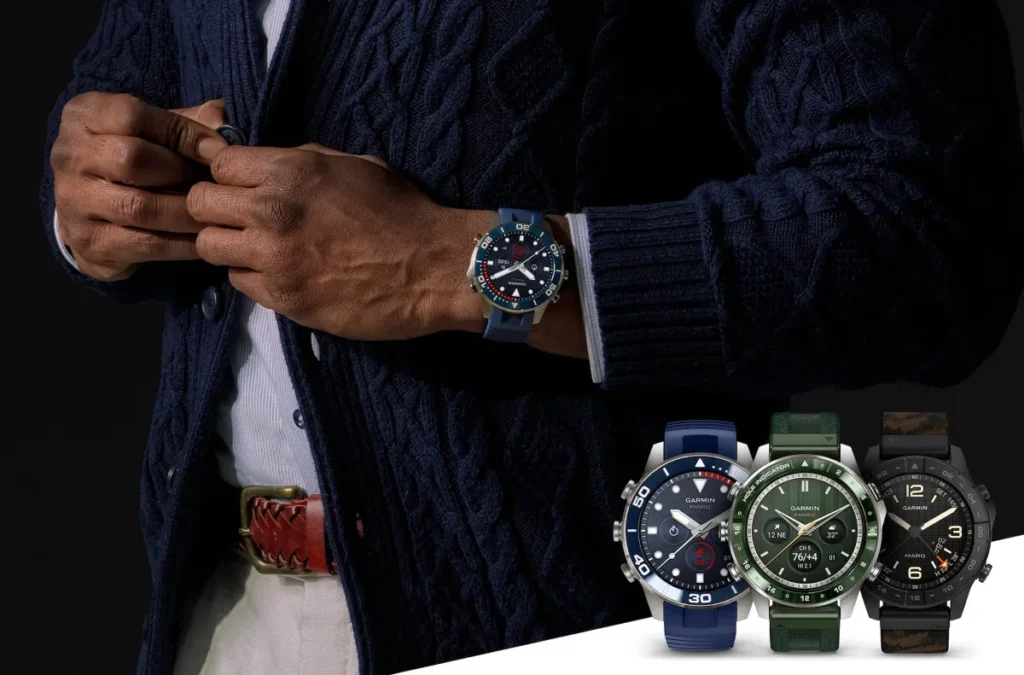
One practical limit: because of how the antennas are designed, none of the editions come on a metal bracelet. If a steel bracelet matters to you, a traditional luxury watch will serve better.
Strengths and trade-offs
Based on Garmin’s specs and the reviews we read, the strengths are clear. The GPS and heart-rate performance sits at the top of the consumer market, the screen is bright and sharp outdoors, and the flashlight is more useful than it sounds. DC Rainmaker described it as the first MARQ that is more than a dressed-up Fenix, because of the hardware and software only it gets.
The trade-offs are just as clear. The price is very high for a device that will be replaced by a newer model in a few years, while a mechanical watch at this price holds its value far better. LTE and satellite features need a subscription, starting around $10 a month for the basic tier according to DC Rainmaker, with extras costing more. Satellite coverage is limited to parts of North America and Europe, and the reviewer found the Messenger pairing clunky.
Smaller complaints include a few mapping bugs that Garmin said it would fix, a heart-rate spike on one steep descent and some altitude drift in a test on a cliff. There is also the thickness: at roughly 15 mm, it sits tall on the wrist next to a slim dress watch.
Gen 3 or Gen 2: which version to buy
The5krunner’s analysis frames this well. Gen 3 is worth the extra money if you train alone in remote areas and want calls or SOS without a phone, or if you dive. If you usually carry a phone and run near coverage, Gen 2 gives you the core tools, such as Training Readiness, HRV status and ClimbPro on a loaded course, for roughly $600 less.
Gen 2 availability is thinning. The titanium Athlete is listed at $1,900 and the Adventurer at $2,100 on Garmin’s US store, while the Aviator and Captain are out of stock for good. Garmin cut Gen 2 prices by $300 in June 2026 and later restored the Athlete to its launch price, so prices may move again as stock runs down.
If neither feels worth it, the cheaper route is the Fenix line, which shares the software. Our best Garmin watch guide walks through the full range, and the Garmin Instinct 3 page covers a rugged option at a much lower price.
Who wears the Garmin MARQ?
Confirmed wearers are thin on the ground, and that is worth saying plainly. The best-documented ones are paid faces of the original 2019 launch. Garmin’s German and Swiss press releases from 29 April 2019 named former footballer Bastian Schweinsteiger and mountain biker Nino Schurter as campaign faces for the MARQ collection. Schweinsteiger appeared wearing the Athlete, and Schurter appeared in the campaign wearing MARQ models without a specific edition named.
Those are 2019 ambassador deals, so we cannot say whether either man wears one today. For Gen 3, we found no named celebrity or athlete wearers in Garmin’s launch material or the launch coverage. The reviewer who tested the Diver and the Adventurer, DC Rainmaker, is a reviewer rather than a brand ambassador.
If you are looking for what athletes wear in general, our Garmin vs Apple Watch guide looks at who wears which. If the titanium case is what appeals, our titanium vs stainless steel explainer covers how the material compares.
Alternatives to the MARQ
The most direct alternative is the older MARQ itself. After that, the sensible step down is the Fenix 9, which Garmin builds the Gen 3 on, giving you the same software and GPS in a lighter, cheaper case. The Garmin Instinct 3 is a rugged, much cheaper option for people who want Garmin’s training tools without a luxury price.
If you want a luxury look and are indifferent to smart features, a mechanical dive watch gives you more resale value for the same money. Our best dive watches guide covers options at every price. Buyers who are mainly after a premium smartwatch and live in an iPhone household can also weigh the Apple Watch, as covered in that same comparison.
FAQ
How much does the Garmin MARQ cost?
The Gen 3 starts at $2,500 for the Athlete and goes to $3,100 for the Aviator, Commander and Diver. Gen 2 models are about $1,900 to $3,200 depending on the edition, as listed on Garmin’s US store in October 2026.
Is the Garmin MARQ worth it?
It is worth it if you will wear it daily and value titanium, ceramic and sapphire alongside top-tier sports tracking. It is hard to justify on features alone, because the Fenix gives you much of the same software for far less.
What is the difference between the MARQ and the Fenix?
They share most software and GPS performance. The MARQ adds a Grade 5 titanium case, ceramic bezel, a larger sealed build and MARQ-only features such as real-time ClimbPro without a loaded course and extra watch faces.
Does the Garmin MARQ have a metal bracelet?
Gen 3 editions do not. Reviewers note that the antenna design rules out metal bands, so you get silicone, leather, woven or calfskin straps instead. The Gen 2 Aviator had a titanium bracelet, but it is now out of stock.
Can you swim or dive with the Garmin MARQ?
Garmin says all Gen 3 models are rated for dives to 40 m and have leakproof buttons. The Diver edition adds full scuba, apnea and freediving features.
Sources
- Garmin: Meet the third-generation MARQ collection
- DC Rainmaker: Garmin MARQ Gen3 In-Depth Review
- the5krunner: Garmin MARQ Gen 3 vs Gen 2
- Gadgets and Wearables: MARQ Gen 3 launch, price and specs
- Garmin: Second-generation MARQ collection announcement
- Garmin Germany: Schweinsteiger becomes campaign face of the MARQ collection