Quick Verdict
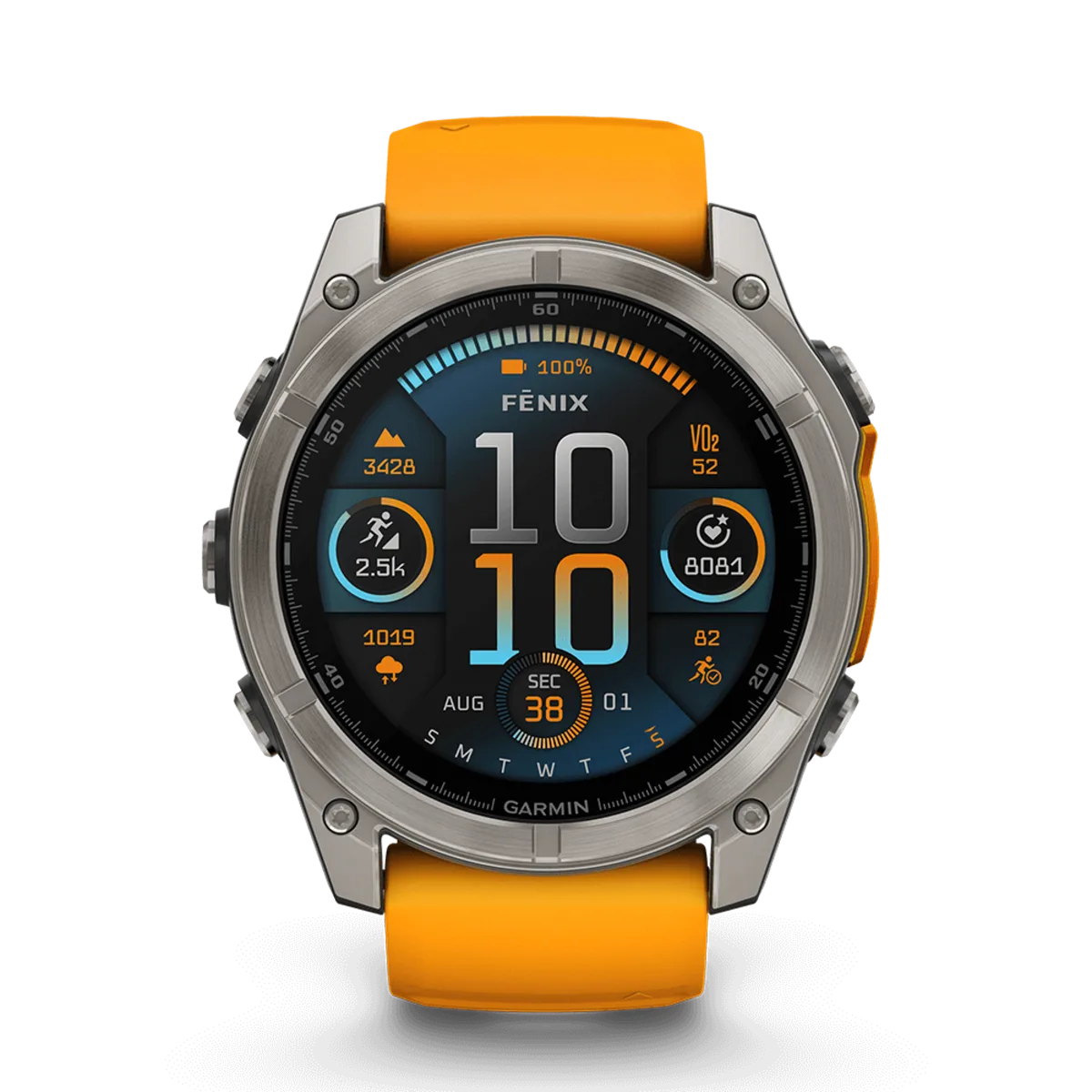
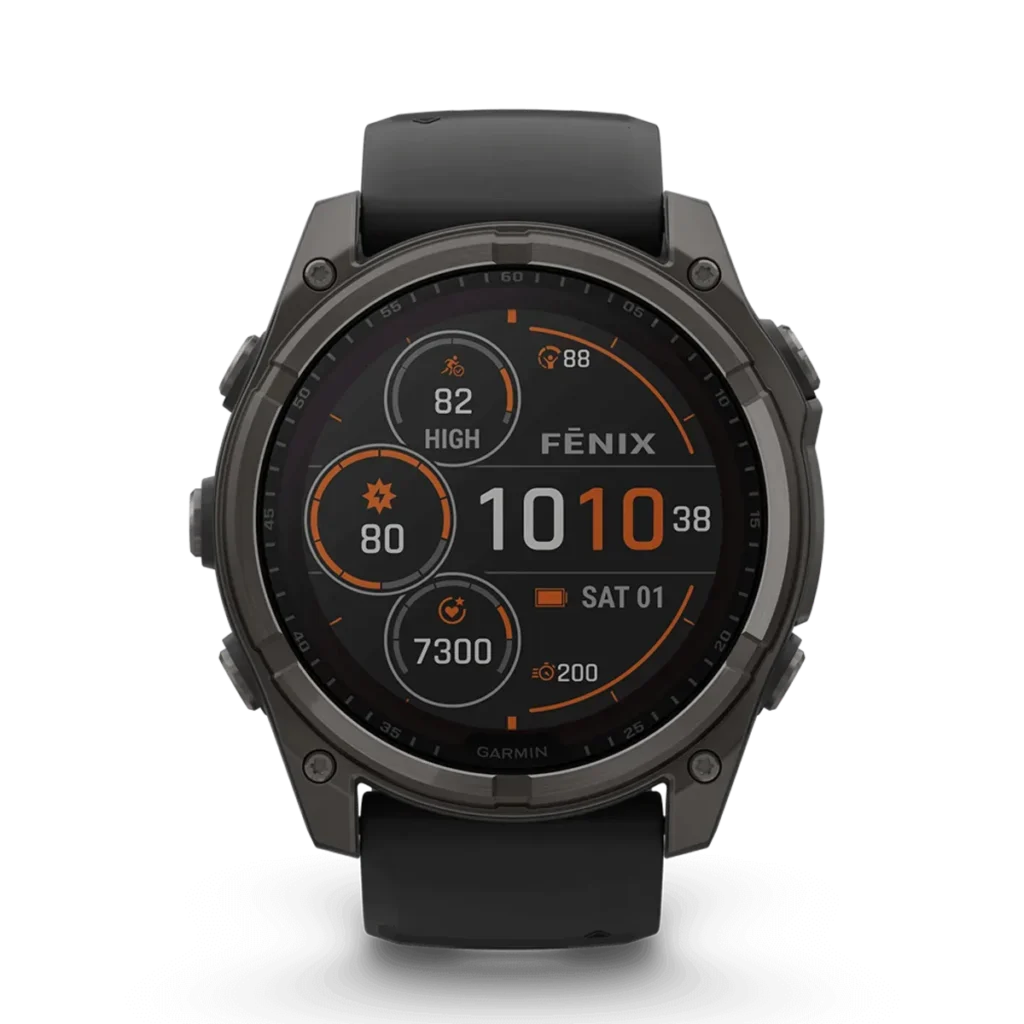
The Garmin Fenix 8 is the best all-round multisport watch at its current price. The AMOLED 47 mm hits the sweet spot for most athletes; the Solar 51 mm is unmatched for multi-day endurance. Recommended.
- Best for: Trail runners, triathletes, adventure travellers
- Display options: AMOLED (vivid, thinner) or Solar MIP (expedition battery)
- Sizes: 43 mm, 47 mm, 51 mm
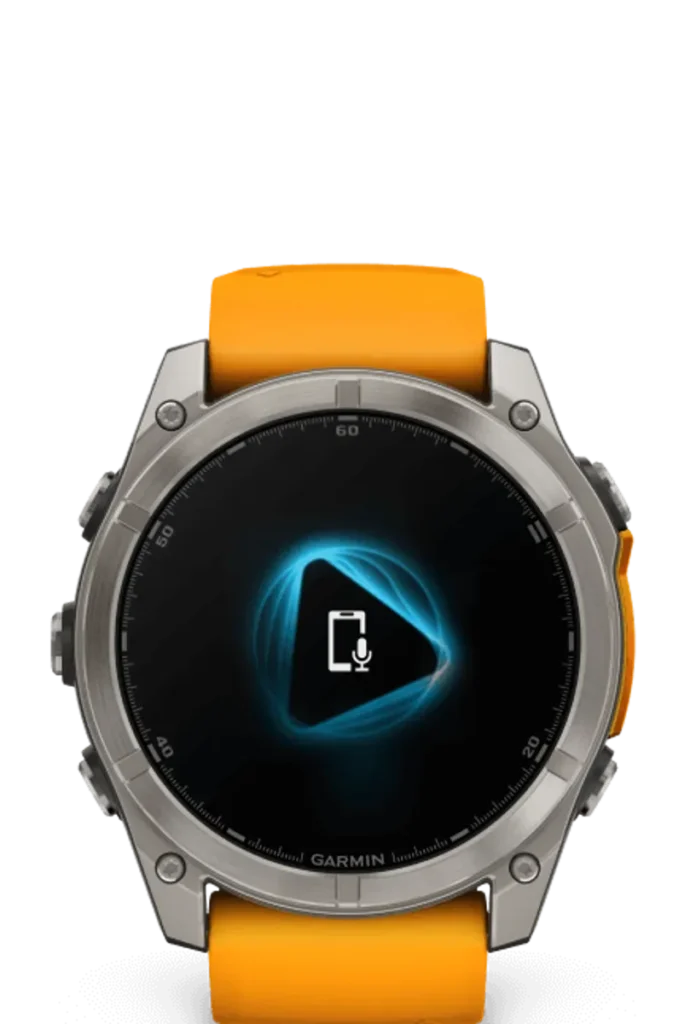
- Standout features: Built-in speaker, 40 m dive cert, multi-band GPS
- Value at current price: Outstanding (AMOLED 47 mm ~$750)
The Garmin Fenix 8 is the first Fenix to offer a bright AMOLED display alongside the classic solar-charging MIP option—and it arrives with dive certification, a built-in speaker and mic, and redesigned inductive buttons. Two years after its August 2024 launch, prices have dropped well below the original MSRP, making this a compelling pick for serious athletes who can’t justify the step up to the Garmin Fenix 8 Pro or the newer Fenix 9. This review breaks down every variant, the AMOLED vs Solar trade-off, and which size actually suits your wrist and your goals.
Where to buy
Compare the same watch on both sites: eBay for pre-owned and vintage pieces, Amazon for new stock.
Prices and availability change; check the listing before you buy.
Fenix 8 Lineup at a Glance
Garmin sells the Fenix 8 in five configurations across two display technologies and three case sizes. The AMOLED versions come in 43 mm, 47 mm, and 51 mm; the Solar versions ship only in 47 mm and 51 mm. All share 32 GB of onboard storage, 10 ATM water resistance, and 40-metre dive certification—a first for the Fenix series.
| Model | Display | Case | Weight (steel/Ti) | Smartwatch battery | All-systems GPS | Approx. price (Nov 2026) |
|---|---|---|---|---|---|---|
| AMOLED 43 mm | 1.3 in · 416 × 416 | 43 × 13.8 mm | 50 g / 44 g | 10 days | 18 h | ~$700–$750 |
| AMOLED 47 mm | 1.4 in · 454 × 454 | 47 × 13.8 mm | 59 g / 52 g | 16 days | 30 h | ~$750 |
| AMOLED 51 mm | 1.4 in · 454 × 454 | 51 × 14.7 mm | 74 g / 64 g | 29 days | 54 h | ~$850–$900 |
| Solar 47 mm | 1.3 in · 260 × 260 MIP | 47 × 15.2 mm | 52 g (Ti only) | 21 days (28 w/ solar) | 48 h (59 h solar) | ~$900+ |
| Solar 51 mm | 1.4 in · 280 × 280 MIP | 51 × 15.4 mm | 64 g (Ti only) | 30 days (48 w/ solar) | 68 h (92 h solar) | ~$1,000+ |
Prices reflect typical retail discounts in late 2026. Titanium Sapphire editions carry a premium of roughly $100–$200 over the standard polymer/steel build.
AMOLED vs Solar: Which Display Should You Choose?
This is the defining question for most buyers. Here is a plain-English breakdown.
Choose AMOLED if…
You spend most of your time in the city, the gym, or on training runs under 10 hours. The AMOLED panel is vivid enough to read full-colour maps in direct sun at max brightness, and the always-on mode (which dims to a watch face rather than going black) is comfortable to live with daily. The 47 mm AMOLED’s 16-day smartwatch life will cover most two-week trips with a little care; the 51 mm pushes 29 days, rivalling some MIP watches. The thinner case profile—13.8 mm on the 47 mm AMOLED versus 15.2 mm on the Solar equivalent—sits more discreetly under a jacket cuff.
Choose Solar if…
You run ultras, tackle multi-day mountaineering routes, or simply hate charging. The Solar lens adds 7–28 extra days (depending on model and sun exposure) and the GPS endurance figures are unmatched in this price bracket: 92 hours all-systems on the 51 mm Solar is a weekend-long adventure with headroom to spare. The MIP display is always-on without any battery penalty and remains perfectly readable in bright alpine conditions. The trade-off is that the Solar case is noticeably thicker and heavier, and the 260 × 260 resolution on the 47 mm Solar looks noticeably coarser than the AMOLED panels.
Battery reality check
In practice, AMOLED GPS figures depend heavily on which satellite systems are active. Enable all systems (GPS + GLONASS + Galileo + BeiDou + NavIC) and the 47 mm AMOLED’s 30-hour GPS figure applies. If you use GPS-only mode, you’ll see closer to 60 hours. For the Solar models, those headline numbers assume 50,000 lux of average sunlight—useful in sunny climates but less meaningful in northern latitudes or winter months.
Size Guide: 43 mm, 47 mm, or 51 mm?
The 43 mm AMOLED is Garmin’s first Fenix with a genuinely small-wrist option. At 50 g in steel trim (44 g in titanium), it wears more like a Forerunner than a traditional Fenix. The GPS endurance—18 hours all-systems—rules it out for ultras and long triathlons, but it’s excellent for daily training, half-marathons, and Olympic triathlons.
The 47 mm is the sweet spot for most buyers. It balances a large display against a wearable weight, and the 30-hour GPS life covers the vast majority of endurance events. If your wrists measure roughly 160–185 mm in circumference, this will feel right.
The 51 mm is for large wrists (185 mm+) or athletes who genuinely need 50+ hours of GPS. At 74 g in steel, it is heavy—on par with some dive computers—so check whether you can live with that before committing. The titanium version shaves 10 g off and is worth the premium if you’re buying the 51 mm.
What’s New in the Fenix 8
Compared to the Fenix 7 series, the Fenix 8 introduces several meaningful upgrades rather than incremental refinements.
Built-in speaker and microphone. You can take Bluetooth calls, use Garmin’s voice assistant, and trigger Siri or Google Assistant from the watch. This is unusual in multisport watches and genuinely useful when cycling or hiking without reaching for a phone.
Dive-certified to 40 metres. The Fenix 8 ships with a dive activity mode covering open-water, freshwater, and recreational scuba. While serious divers will want a dedicated dive computer, this covers casual scuba on holiday to resort depths.
Inductive crown and button design. Physical buttons sit flush with the case and register presses through a subtle mechanical click rather than protruding through gaskets. Garmin says this improves water ingress protection and is more reliable than traditional pushers under pressure.
Multi-band GPS. The Fenix 8 uses Garmin’s latest all-systems multi-band chipset, delivering improved accuracy in tree canopy, urban canyons, and deep valleys. In dense forest, track accuracy is noticeably better than the Fenix 7 series.
Dive computer mode and OW diving. Beyond the hardware certification, the watch includes tide data, underwater heart rate from the optical sensor (accuracy varies by water clarity), and dive logging synced to Garmin Connect.
Training and Performance Features
The Fenix 8 inherits Garmin’s full training ecosystem. Daily Suggested Workouts adapt to your recent load; Training Readiness scores training stress, sleep, HRV, and load history into a single daily figure. HRV Status is tracked continuously overnight and displayed in Garmin Connect as a trend.
Running Dynamics (cadence, ground contact time, stride length, vertical oscillation) work natively with the optical sensor for basic metrics and pair with the HRM-Pro Plus or Running Dynamics Pod for full data. Cycling power requires an external power meter. The watch supports ANT+ and Bluetooth dual-band, so it pairs with virtually any sensor on the market.
Triathlon and multisport modes are built in, with auto-transition detection. Navigation features include full TopoActive maps, turn-by-turn routing, and ClimbPro for elevation planning. Those who use the Garmin Forerunner vs Fenix comparison to decide between lines will find the Fenix’s onboard mapping is the clearest differentiator—Forerunners offer breadcrumb navigation at best.
Smartwatch Features and Daily Wearability
The Fenix 8 runs Garmin’s Connect IQ platform. There are thousands of watch faces, apps, and data fields, though the ecosystem remains narrower than Wear OS or Apple watchOS. Garmin Pay for contactless payments, music storage for 500+ songs, and Spotify/Deezer/Amazon Music offline playback are all present.
Smart notifications work reliably on both Android and iPhone. Responding to messages requires an Android phone paired via Bluetooth; iPhone users get read-only notifications. The Apple Watch remains the better choice purely for smart features—Siri integration, App Store depth, and notification management are all superior. But anyone who needs 10+ days of battery, serious GPS, or multi-sport training will find the Apple Watch falls short on the athletic side.
The Fenix 8 is a reasonable daily watch. The 47 mm version, in particular, sits comfortably without looking like a tactical field device. The AMOLED display is attractive enough for office wear. Sleep tracking includes overnight HRV, SpO2, and REM/deep/light breakdown, all accessible in the Garmin Connect morning report.
Fenix 8 vs Fenix 8 Pro and Fenix 9
It’s worth situating the Fenix 8 within the current lineup. The Garmin Fenix 8 Pro (reviewed separately) adds a MicroLED display, an LTE cellular radio, and a higher retail price. For most athletes, the standard Fenix 8 offers better value: LTE dependency on a subscription adds cost, and MicroLED remains more of a tech showcase than a daily-training essential.
The Fenix 9, launched in August 2026 at $999.99, brings further sensor refinements and software improvements. If budget allows, the Fenix 9 is the more future-proof purchase. But the Fenix 8 at its current discounted pricing—around $750 for the AMOLED 47 mm—represents substantially better value per feature than the Fenix 9 at launch price. Owners who already have a Fenix 7 have less reason to upgrade to the Fenix 8 specifically; the Fenix 9 makes a stronger case.
If you’re comparing the Fenix line against more accessible Garmin options, the Garmin Instinct vs Fenix comparison covers the entry-level rugged angle, while the best Garmin for running and best Garmin for triathlon guides place the Fenix 8 against the broader range.
Who the Fenix 8 Is For
The Garmin Fenix 8 makes most sense for athletes who train across multiple disciplines, regularly go off-road, or need a watch that works for adventure travel and daily life without compromising. At current pricing, it sits in a compelling sweet spot between the value-focused Forerunner 965 and the flagship Fenix 8 Pro.
It’s an especially strong choice for trail runners and hikers who do sessions between 4–60 hours (covered by the AMOLED 47 mm to Solar 51 mm respectively), cyclists and triathletes who need full sensor pairing and onboard maps, and travellers who want dive certification, music offline, and contactless payments in one device.
It is not the right pick if you prioritise smart features over athletic ones (look at the Apple Watch Ultra 2), if you do regular ultras beyond 60 hours without a charging opportunity (consider the Solar 51 mm or the Enduro 3), or if budget is tight and you train mainly on the road (the Forerunner 965 covers 90% of the same training features for less).
The best hiking watches guide places the Fenix 8 Solar as a top recommendation specifically for multi-day expeditions where daily charging is impractical.
Verdict
The Garmin Fenix 8 is the most versatile watch Garmin has made: the AMOLED display option finally makes the Fenix genuinely comfortable to wear daily, and the dive certification, speaker, and inductive buttons add real-world utility without feeling like spec-sheet bloat. At post-launch prices, the AMOLED 47 mm is an outstanding multisport watch that’s hard to fault for anyone spending between $700 and $800.
The choice between AMOLED and Solar comes down to a simple question: do you value a vivid, modern-looking display (AMOLED) or genuinely expedition-ready battery life (Solar)? Both are excellent at what they do. The Solar 51 mm remains in a class of its own for sustained endurance—if your adventures run to multi-day fastpacking or ultra-distance events, nothing on the market at this price comes close.
FAQ
Is the Garmin Fenix 8 waterproof?
Yes. The Fenix 8 is rated to 10 ATM and is specifically certified for diving to 40 metres. It includes a dedicated dive activity mode.
How long does the Garmin Fenix 8 battery last?
The AMOLED 47 mm lasts up to 16 days in smartwatch mode and 30 hours in all-systems GPS mode. The Solar 51 mm reaches up to 48 days (with solar) and 92 hours GPS (with solar).
What is the difference between the Fenix 8 AMOLED and Solar?
AMOLED versions use a bright colour touchscreen with vivid graphics. Solar versions use a low-power MIP display with an integrated solar charging lens for substantially longer battery life.
Does the Garmin Fenix 8 have a built-in speaker?
Yes. The Fenix 8 is the first standard Fenix series to include a built-in speaker and microphone, enabling Bluetooth call handling and voice assistant access.
How does the Fenix 8 compare to the Fenix 9?
The Fenix 9 launched August 2026 from $999.99 with updated sensors. At current pricing around $750, the Fenix 8 AMOLED 47 mm offers substantially better value.