The Garmin Venu 3 is what happens when Garmin finally stops treating style as an afterthought. Launched in 2023, it pairs a bright 1.4-inch AMOLED touchscreen with the brand’s most comprehensive health-tracking suite — including a built-in speaker and microphone for phone calls, ECG capability added post-launch, nap detection, and offline music. If you’ve ever wanted Garmin’s legendary accuracy in a watch you’d actually want to wear to work, this is it.
It launched at $449, but the Venu 3 now regularly sells for considerably less — often in the $279–$320 range on Amazon and at major retailers. That price drop makes an already compelling watch genuinely hard to pass up. This review covers everything you need to know: who it’s for, what it does well, where it falls short, and how it stacks up against the competition.
Who Is the Garmin Venu 3 For?
The Venu 3 is Garmin’s answer for the health-conscious wearer who wants a stylish daily watch — not someone training for an Ironman, but someone who cares about sleep quality, stress levels, and hitting their step count without looking like they’re wearing a GPS unit from 2015. It sits above the Garmin Vivoactive 5 in Garmin’s lineup, offering a more premium build, a speaker for calls, and a fashion-forward design language that works equally well at the gym and in a meeting room.
It’s particularly popular with women — the smaller Venu 3S (41mm) is one of the top Garmin picks for smaller wrists — and with anyone who’s been eyeing a fitness-focused alternative to the Apple Watch or Samsung Galaxy Watch. If you want multiband GPS for trail running or the rugged durability of the Fenix 8 Pro, look elsewhere. But if you want deep, reliable health data in a watch that earns compliments, the Venu 3 is the right call.
Design and Display
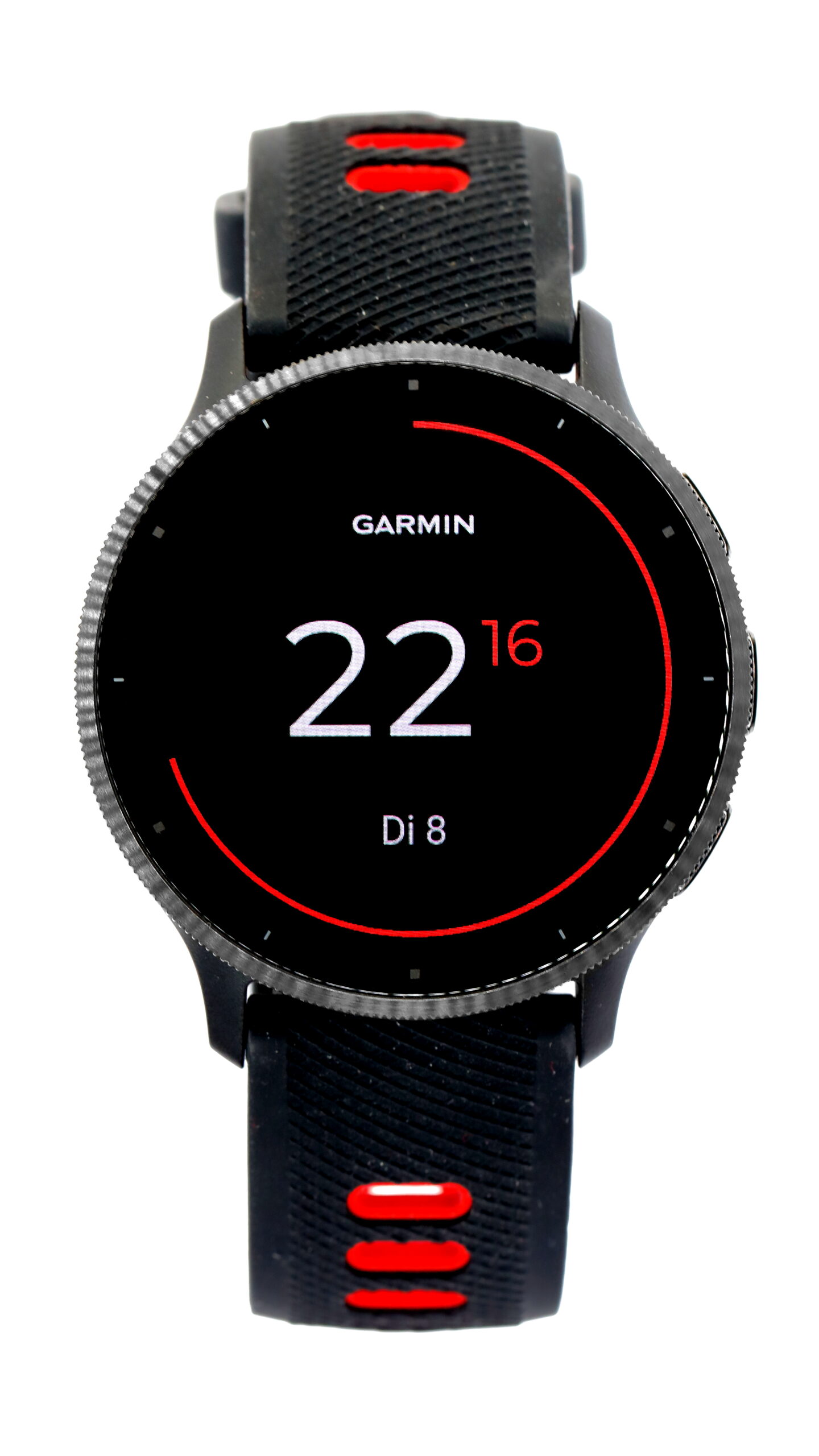
The 45mm Venu 3 is built around a stainless steel bezel and case with a Corning Gorilla Glass 3 lens — a step up from the aluminum construction you’d find on most of Garmin’s mid-tier offerings. It’s available in several color combinations, including Slate/Black, White/Gold, and Ivory/Gold, giving it genuine lifestyle credibility. The silicone band is comfortable for 24/7 wear, and you can swap it for any 22mm band.
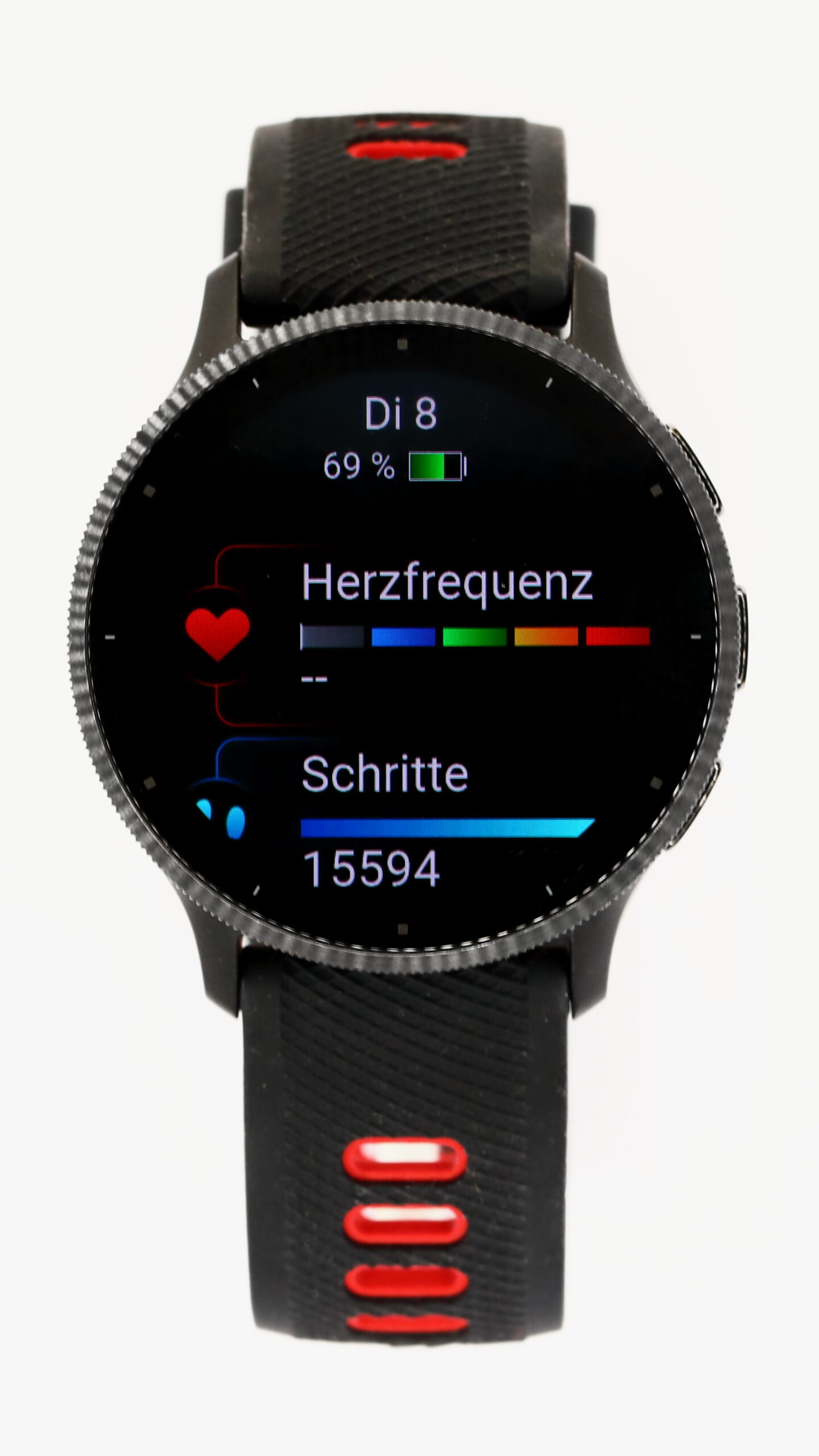
The star of the show is that 1.4-inch AMOLED touchscreen at 454×454 resolution. Colors are vivid, blacks are genuinely black, and visibility in direct sunlight is excellent for an AMOLED panel — Garmin’s transflective coating does real work here. The always-on display mode works, though it noticeably cuts battery life. Two side buttons handle navigation alongside the touchscreen, giving you physical controls when you’re sweaty or wearing gloves.
The watch is water-rated to 5 ATM, meaning pool swimming is fully covered. It’s not a dive watch, but it handles everything from lap swimming to getting caught in the rain without complaint. At 49 grams, it’s not ultralight, but it disappears on the wrist after a day of wear.
Health and Fitness Tracking
This is where the Venu 3 genuinely earns its stripes. Garmin’s ELEVATE V5 optical heart rate sensor sits on the underside of the case, delivering continuous heart rate monitoring alongside pulse oximetry (SpO2) for blood oxygen tracking. In testing, heart rate readings align closely with chest strap data during moderate workouts — you’d only need a dedicated HR strap for the most precise interval training data.
The health feature list is long, but the highlights that actually change day-to-day behavior are worth calling out individually:
- Body Battery (revamped): Garmin’s energy reserve score has been refined on the Venu 3, now incorporating HRV data alongside sleep and stress readings for a more accurate picture of how recovered you actually are. It genuinely influences workout decisions once you learn to trust it.
- HRV Status: Heart rate variability tracking with a 5-day rolling baseline gives you an objective view of readiness that goes beyond simple step counts or calorie burns.
- Sleep Coach: The Venu 3 goes further than most wearables by offering personalized sleep need estimates and actual coaching on how to improve sleep quality. The addition of nap detection is a genuinely useful feature for shift workers and anyone who catches afternoon rest — it logs naps automatically without manual input.
- ECG: Added via firmware update after launch, the ECG app detects atrial fibrillation. It launched in the US, Vietnam, and Hong Kong, with European availability expanding from January 2025. You hold your finger on the stainless steel bezel for 30 seconds and get a readable ECG trace in the Garmin Connect app.
- Health Snapshot: A 2-minute guided reading that captures heart rate, SpO2, stress, and HRV simultaneously — useful as a morning baseline or when you’re feeling off and want a quick health check.
- Wheelchair and Handcycle Profiles: The Venu 3 is one of the few smartwatches with dedicated profiles for wheelchair users, tracking pushes, roll distance, and strain — a meaningful inclusion that reflects Garmin’s growing accessibility focus.
On the sport side, the Venu 3 carries over 25 activity profiles including running, cycling, swimming, strength training, yoga, and Pilates. VO2 Max estimation, Garmin Coach training plans, and recovery time recommendations are all present. The GPS is multi-GNSS single-band — accurate enough for most fitness use cases, but not the multiband precision you’d get from the Forerunner 965 or Fenix 8. If GPS accuracy during dense urban or trail runs is critical, the Forerunner or Fenix lines are better suited.
Smart Features
The Venu 3’s biggest differentiator from the Vivoactive 5 and most of Garmin’s fitness-focused lineup is its built-in speaker and microphone. You can take and make phone calls directly from your wrist — it works with both Android phones and iPhones, which is relatively rare in the Garmin lineup. Call quality is functional rather than impressive (you’ll want a quiet room), but the fact that it’s there at all sets the Venu 3 apart.
iPhone users also get Siri access via the watch, letting you set timers, send messages, and ask questions without pulling out your phone. Android integration handles Google Assistant notifications but doesn’t offer on-watch Assistant voice commands natively.
Offline music is a strong suit. The watch supports Spotify, Amazon Music, and Deezer for download — you can sync playlists over Wi-Fi and leave your phone at home. With 8GB of internal storage, there’s room for a solid playlist. Garmin Pay rounds out the contactless payment support, working with a growing list of banks and credit card issuers.
Standard smartwatch features — notifications, weather, timers, alarms — all work as expected. The Garmin Connect ecosystem remains one of the most comprehensive health data platforms available, and Connect IQ opens the watch to third-party watch faces, widgets, and apps.
Battery Life
Garmin claims up to 14 days in smartwatch mode, 5 days with the always-on display active, 26 hours in GPS-only mode, 20 hours with multi-GNSS, and 11 hours with GPS plus music streaming. In practice, with daily step tracking, heart rate monitoring, two or three workouts per week using GPS, and notifications enabled, expect 7–10 days between charges. That’s still significantly better than any Apple Watch or Samsung Galaxy Watch.
Charging uses Garmin’s proprietary magnetic clip — the same style used across the Venu and Vivoactive lines. It’s not universal, so keep the cable accessible. A full charge takes around 2 hours. The lack of Qi wireless charging is a minor annoyance, but given the battery life, you’re not reaching for the charger often enough for it to be a dealbreaker.
Garmin Venu 3 vs Venu 3S: Which Should You Buy?
The Venu 3S is the same watch in a 41mm case, with a 1.2-inch display and 10 days of battery life in smartwatch mode — scaled down proportionally for smaller wrists. Both models launched at the same $449 price. The 3S gives up a little screen real estate and a few days of battery, but otherwise runs identical software and health features. If your wrist circumference is on the smaller side or you just prefer a less imposing watch profile, the 3S is the better fit. For most users, the 45mm Venu 3 is the more versatile pick.
How It Compares to the Competition
The Garmin Vivoactive 5 is the closest sibling. It’s lighter, starts cheaper, and covers many of the same health bases — but it lacks the speaker and microphone for calls, has a less premium build quality, and doesn’t match the Venu 3’s display brightness or bezel quality. If you don’t need phone call capability and want to save money, the Vivoactive 5 is a solid alternative. If you want the full package, the Venu 3 is worth the premium — especially at current discounted prices.
Against the Apple Watch SE or Samsung Galaxy Watch 7, the Venu 3 wins on battery life by an enormous margin and matches or beats them on health tracking depth (especially sleep). It loses on third-party app ecosystem and deep smartphone integration. If you’re firmly in the Apple ecosystem and app selection matters most, the Apple Watch has advantages. If health data quality and battery life are priorities, the Venu 3 is the more compelling choice.
Pros and Cons
| Pros | Cons |
|---|---|
| Vivid 1.4″ AMOLED display | No multiband GPS |
| Built-in speaker and mic for calls | Proprietary magnetic charging |
| 14-day battery (smartwatch mode) | No Google Assistant on-watch |
| ECG capability (via update) | Premium pricing at launch |
| Nap detection + Sleep Coach | 8GB storage can feel limited for large music libraries |
| Offline Spotify, Amazon Music, Deezer | Always-on display cuts battery significantly |
| 5 ATM water resistance | |
| Wheelchair and handcycle profiles | |
| Garmin Pay |
Frequently Asked Questions
Does the Garmin Venu 3 have ECG?
Yes — ECG functionality was added to the Garmin Venu 3 via a firmware update after the initial launch. It was initially available in the United States, Vietnam, and Hong Kong, with European availability rolling out from January 2025. The ECG app detects signs of atrial fibrillation (AFib) in a 30-second reading and stores results in the Garmin Connect app. Check regional availability in the Garmin Connect app settings for your specific country.
What is the difference between the Garmin Venu 3 and Venu 3S?
The Venu 3 has a 45mm case, 1.4-inch display, and up to 14 days of battery life in smartwatch mode. The Venu 3S has a 41mm case, 1.2-inch display, and up to 10 days of battery life. Both models share identical features, software, and health sensors — the only differences are size and battery endurance. Both launched at the same $449 retail price. The 3S is a popular choice for those with smaller wrists.
Does the Garmin Venu 3 work with iPhone?
Yes, the Garmin Venu 3 is fully compatible with iPhone (iOS 16 or later required). It supports Siri voice commands, notifications from iPhone apps, Garmin Pay, and the Bluetooth phone call feature via the built-in speaker and microphone. Music sync for offline playback (Spotify, Amazon Music, Deezer) works via the Garmin Connect app on iPhone. Some features, like Google Maps navigation prompts, require an Android phone.
Is the Garmin Venu 3 worth buying in 2025?
At current market prices — often $279–$320 — the Garmin Venu 3 is an excellent value. The hardware remains competitive, the ECG update expanded its health credentials, and Garmin’s software support lifecycle is typically multi-year. For health-focused buyers who want something stylish, accurate, and capable of lasting a week-plus on a charge, the Venu 3 holds up well against newer competition. The only reason to pause is if multiband GPS precision or a broader smartwatch app ecosystem is non-negotiable for you.
Verdict
The Garmin Venu 3 makes a compelling case for being the best health smartwatch for people who don’t consider themselves athletes. It combines an AMOLED display that holds up in daylight, Garmin’s best-in-class sleep and recovery tracking, a full week or more of battery life, and smart features — including the often-overlooked speaker for phone calls — that most fitness watches still don’t offer. The ECG update cements its health credentials further.
It isn’t the right choice if precise GPS tracking for trail running or marathon training is your priority — the Forerunner series handles that better. And if you’re deeply embedded in Apple’s ecosystem, the Apple Watch’s integration advantages are real. But for the majority of health-conscious everyday wearers, the Venu 3 hits the sweet spot: accurate, stylish, and genuinely useful 24 hours a day. At current prices, it’s one of Garmin’s best value propositions.