Featured image: Garmin
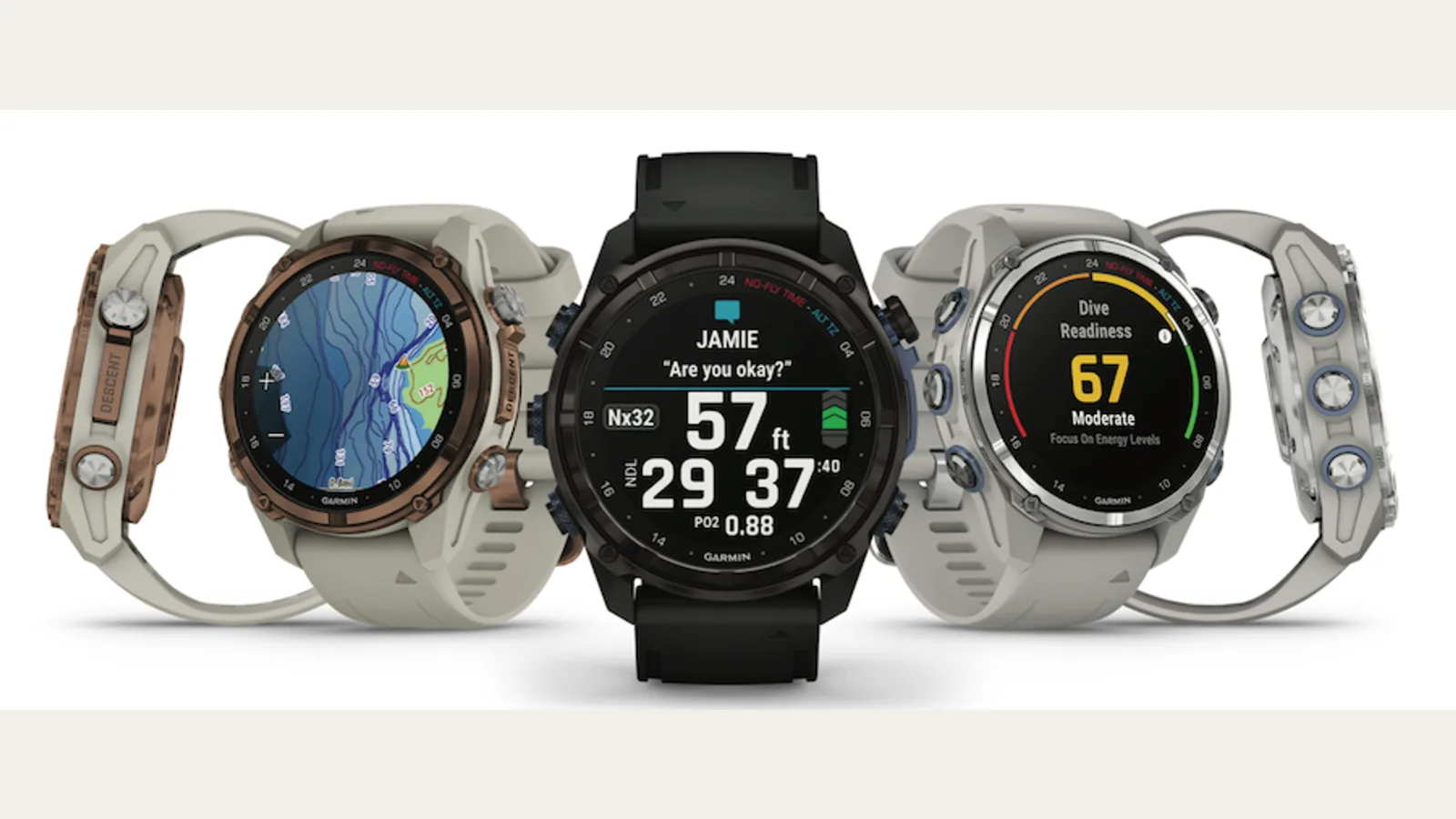
The Garmin Descent is Garmin’s line of watch-style dive computers, and the one most people mean today is the Descent Mk3i (43 mm or 51 mm, 200 m dive rating, air integration with the Descent T2 transmitter), with the cheaper Descent G2 as the lighter-weight option.
Quick answer The Descent Mk3i is Garmin’s flagship dive computer you wear like a watch: sapphire glass, an AMOLED screen, 200 m depth rating and optional tank-pressure and sonar messaging. The Descent G2 (about $700) covers recreational and technical dives to 100 m at roughly half the price. As of November 2026, the Mk3 family dates from late 2023 and no Mk4 has been announced.
Who the Garmin Descent is for
The Descent line suits divers who want one device that logs dives, tells them their no-decompression limit and also works as an everyday smartwatch. It is a serious dive computer first: the top models handle multi-gas, trimix and closed-circuit rebreather modes, and the screen stays readable underwater.
It is less obvious for a casual holiday snorkeler or an occasional recreational diver. Reviewers who have used the range describe the feature set as more than most divers need, and the price sits well above basic dive computers. If you mostly want a rugged GPS sports watch, a Fenix or Instinct is the better value (see our guide to the best Garmin watch).
This page is based on Garmin’s specifications and long-term reviews from outlets that dive with the product, including DIVE Magazine, TechRadar and Divein. WKOW has not tested the watches itself.
The current Descent line at a glance
Garmin sells several Descent products at once, and the names are confusing. Two are true watch-style computers from the Mk3 generation (Mk3 and Mk3i), one is the newer G2, and two are large-format units (X50i and X30) that strap on like a gauge rather than a watch. The older Mk2 and G1 Solar are still listed on some regional Garmin sites but are earlier generations.
Descent Mk3i and Mk3
Launched in November 2023, the Mk3 series doubled the depth rating of the Mk2 to 200 m (about 656 ft) and moved to a bright AMOLED display behind a sapphire lens. The 43 mm models use a 1.2-inch screen, and the 51 mm Mk3i has a 1.4-inch screen and a built-in flashlight.
The “i” matters. The Mk3i works with the Descent T2 transmitter that screws onto a tank’s first stage, giving air integration and SubWave sonar messaging with your buddy. The plain Mk3 (43 mm only) does not support the transmitter. In April 2026 Garmin added a two-tone black and silver titanium 51 mm Mk3i, along with Setup Sharing between two Descent computers and a sidemount tank-switch prompt.
Descent G2
Announced in February 2025 at $699.99, the G2 has a 1.2-inch AMOLED display, a sapphire lens and a case, bezel and buttons made from recycled ocean-bound plastic. It is rated to 100 m and supports recreational and technical modes, closed-circuit rebreather, gauge and freediving (apnea) modes. It does not have the Mk3i’s transmitter support.
| Spec | Descent Mk3i | Descent Mk3 | Descent G2 |
|---|---|---|---|
| Case size | 43 mm or 51 mm | 43 mm | Not stated in Garmin’s launch release |
| Material | Sapphire lens; titanium or DLC titanium options, titanium rear cover | Sapphire lens; steel or titanium bezel | Recycled ocean-bound plastic case; sapphire lens |
| Display | AMOLED, 1.2 in (43) or 1.4 in (51) | AMOLED, 1.2 in | AMOLED, 1.2 in |
| Dive rating | 200 m | 200 m | 100 m |
| Battery (smartwatch) | Up to 10 days (43) / 25 days (51) | Up to 10 days | Up to 10 days |
| Battery (dive mode) | Up to about 30 hours | Up to about 30 hours | Not stated in the launch release |
| Air integration / sonar messaging | Yes, with T2 transmitter | No | No |
| Approx. price (launch, USD) | About $1,400 (43), about $1,600 to $1,800 (51) | About $1,200 | About $700 |
Where to buy
Compare the same watch on both sites: eBay for pre-owned and vintage pieces, Amazon for new stock.
Garmin Descent Mk3i 43mm
Garmin Descent G2 Alternative
Garmin Descent Mk3 43mm Alternative
Prices and availability change; check the listing before you buy.
Prices are launch or review-time figures. The T2 transmitter is a separate purchase of roughly $500, and retailer pricing moves, so check current listings.
What the Descent does well
The display is the first thing reviewers praise. TechRadar gave the Mk3i five stars and DIVE Magazine called the screen clear in all conditions, with five physical buttons that use leak-proof inductive switches so there is little to flood.
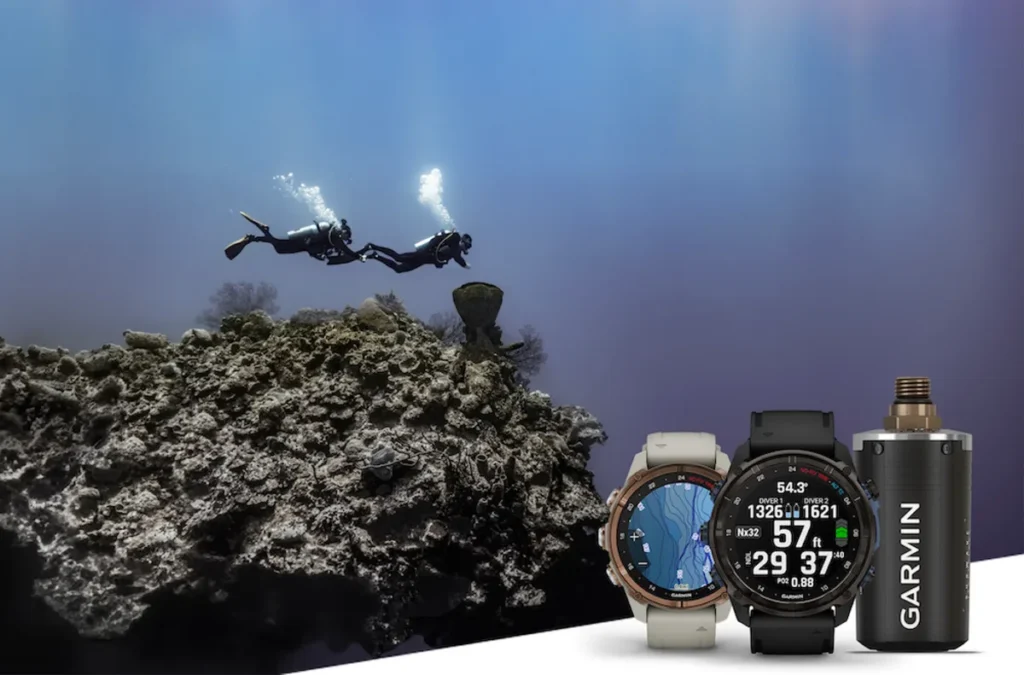
Battery life on land is strong, especially on the 51 mm model, which Garmin rates at up to 25 days in smartwatch mode. DIVE Magazine’s reviewer wore one for nearly two months, charging it just once around ten dives.
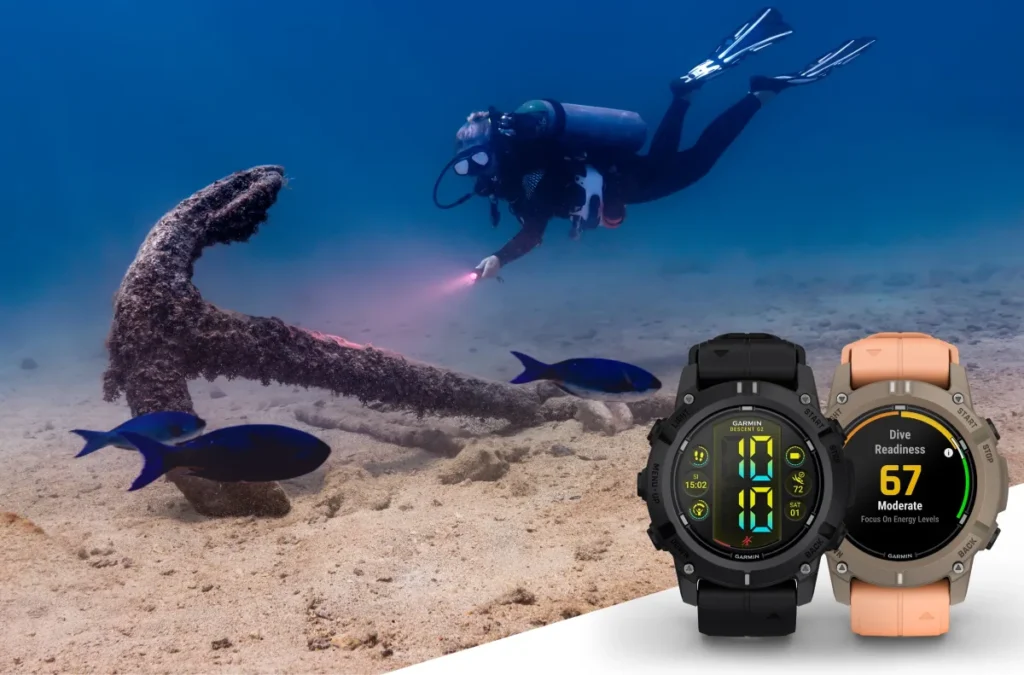
Dive depth and gas handling are also well ahead of most smartwatches. The Mk3 family supports a bottom gas plus up to 11 deco or backup gases, plus gauge, apnea and rebreather modes. Garmin’s Dive Readiness score, DiveView maps and the Garmin Dive app for logs and settings round out the package.
Trade-offs to know before you buy
Price is the headline. Divein described the Mk3i as the most expensive dive computer on the market by a wide margin, roughly $500 above rivals such as the Shearwater Perdix 2. Add the T2 transmitter and you are well beyond $1,900 for the 43 mm.
The 51 mm case is large and thick, and several reviewers flag it as bulky on smaller wrists. Dive-mode battery of about 30 hours is fine for trips, but it is far shorter than the smartwatch figure, so you will charge after a diving weekend.
Underwater messaging works but is not instant. Reviewers reported delays of several seconds up to about 45 seconds, and the T2’s sonar clicking annoyed at least one buddy. Messages only work between a Mk3i and a T2 transmitter, and Divein noted early software glitches that Garmin addressed with updates. The menus are dense, and DIVE Magazine suggested configuring everything in the phone app rather than on the wrist.
Which Garmin Descent should you buy?
Choose the Mk3i 43 mm if you want the full feature set on a wrist-friendly case, and you plan to add a T2 transmitter. Choose the Mk3i 51 mm if you want the biggest screen, the flashlight and the longest battery, and your wrist can take it.
The plain Mk3 only makes sense if you never want air integration and can find it at a clear discount. Otherwise the Mk3i is the better long-term pick.
The G2 is the one most recreational divers should look at first. At about $700 it gives you a 100 m rating, multi-gas and rebreather support and an AMOLED screen. Divers who want a ruggedly everyday GPS watch can also compare it with the broader range in our Garmin vs Apple Watch comparison, and our best dive watches guide covers mechanical alternatives.
The large-format X50i and X30
These are not watches. The Descent X50i (announced November 2024, about £1,330) is a 3-inch colour touchscreen unit rated to 200 m with air integration, a backup dive light and SubWave messaging. The Descent X30 (announced in 2025, £649.99 in the UK) has a 2.4-inch screen, up to 30 hours of battery and a 10 ATM rating, and is pitched at recreational divers who want a big screen.
Both strap to the wrist like a gauge and are really aimed at technical or dedicated divers. If you want something you can wear to the office, stay with the Mk3i or G2.
Who wears the Garmin Descent
We could not find a confirmed celebrity or athlete wearer of a current Descent model in reputable coverage, so we are not going to name one. Garmin markets the line to divers, freedivers and outdoor users rather than through celebrity endorsement.
If a famous wearer is confirmed by a reliable source, it will be added here. For named athletes and public figures who do wear Garmin, see our Garmin Instinct 3 page and the Garmin round-up.
Alternatives to the Garmin Descent
Dedicated dive computers from Shearwater and Suunto offer simpler interfaces and, in Shearwater’s case, a strong reputation among technical divers, though they do not double as a full smartwatch. The Apple Watch Ultra line can run dive apps, but it is not a replacement for a purpose-built computer with gas planning and redundancy.
For a water-ready everyday watch with no dive-computer role, see what water-resistance ratings really mean before relying on any watch underwater.
FAQ
Is the Garmin Descent a real dive computer?
Yes. Descent models support air, nitrox, trimix and (on most models) rebreather and gauge modes, and log dives to the Garmin Dive app (Garmin lists Bühlmann ZHL-16C with gradient factors for the X50i).
What is the latest Garmin Descent?
The newest watch-style models are the Descent G2 (February 2025) and the Mk3 family (November 2023, refreshed with a two-tone 51 mm Mk3i in April 2026). The large-format X50i and X30 are the newest by design, and no Mk4 has been announced as of November 2026.
What is the difference between the Garmin Descent Mk3 and Mk3i?
The Mk3i supports the Descent T2 transmitter, which adds air integration and SubWave sonar messaging, and it comes in both 43 mm and 51 mm. The Mk3 is 43 mm only and has no transmitter support.
How deep can the Garmin Descent go?
The Mk3 and Mk3i have a 200 m depth rating, while the G2 is rated to 100 m. Recreational diving limits are far shallower than either rating.
How much does a Garmin Descent cost?
Roughly $700 for the G2, about $1,200 for the Mk3 and about $1,400 to $1,800 for the Mk3i at launch pricing. The T2 transmitter adds about $500.
Can I use a Garmin Descent as an everyday watch?
Yes. It runs heart rate, sleep, GPS sports tracking, notifications and Garmin Pay, and the 51 mm Mk3i can go up to 25 days between charges in smartwatch mode.
Sources
- Garmin: Which Garmin dive computer is right for me?
- Garmin press release: Descent G2 watch-style dive computer
- DIVE Magazine: Review of the Garmin Descent Mk3i
- TechRadar: Garmin Descent Mk3i review
- Divein: Garmin Descent Mk3/Mk3i dive computer review
- Divernet: Two-tone Garmin Descent Mk3i released